
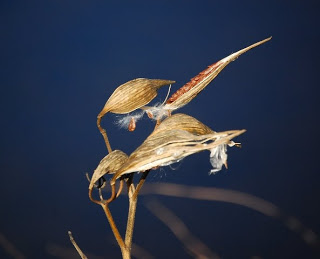
 Today, I saw all of this at the pond. I’m going to let the photos show you everything that was before me in about an hour and a half’s time.
Pileated Woodpecker

Snow Bunting – note white wing patches
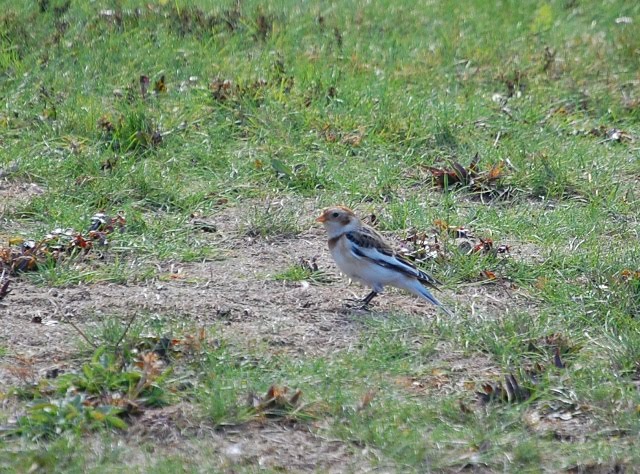 Snow Bunting – see beautiful tail feathers
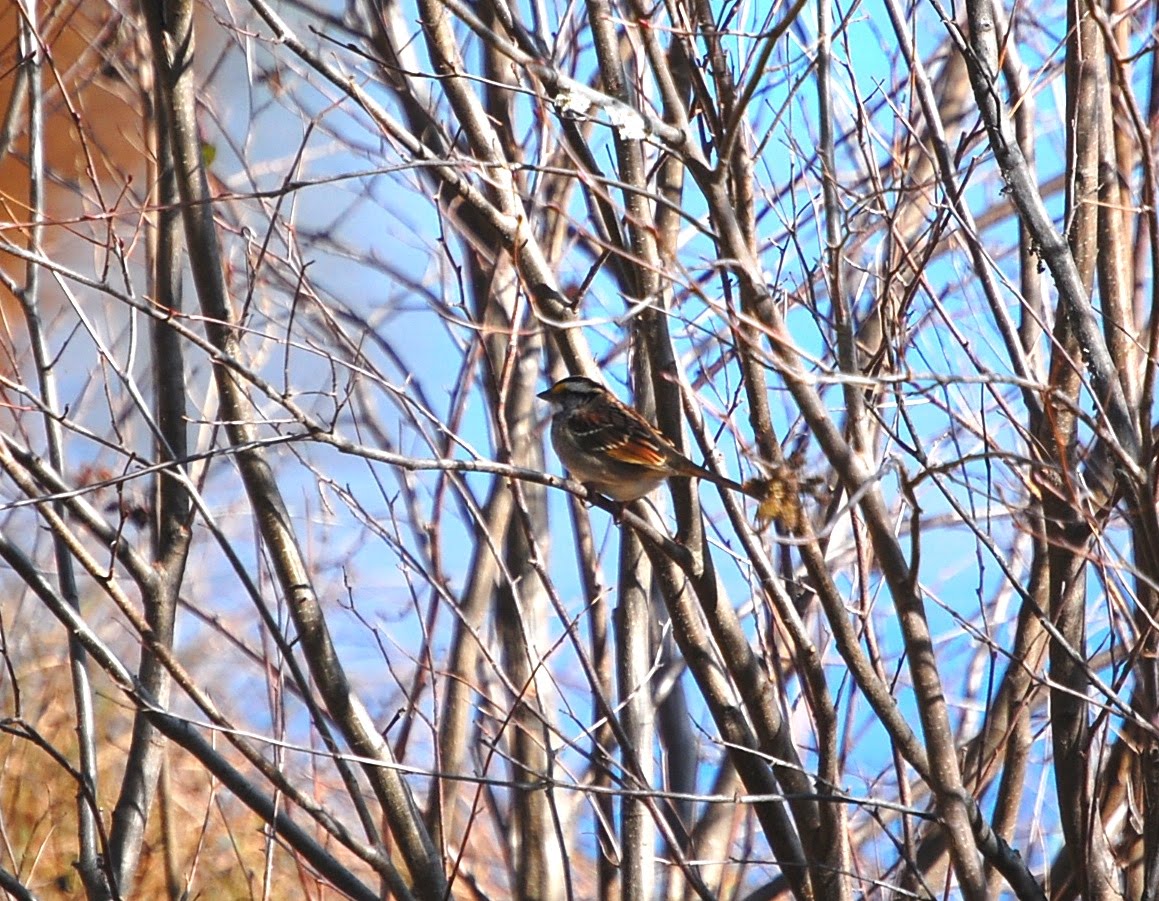
 White-throated Sparrow
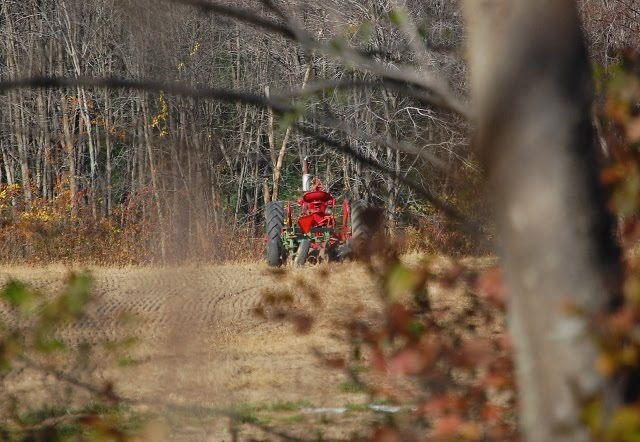
 Tractor in adjacent field
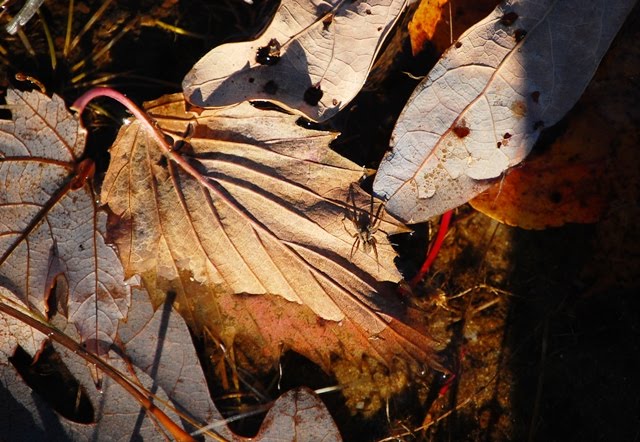
 Spider on leaves
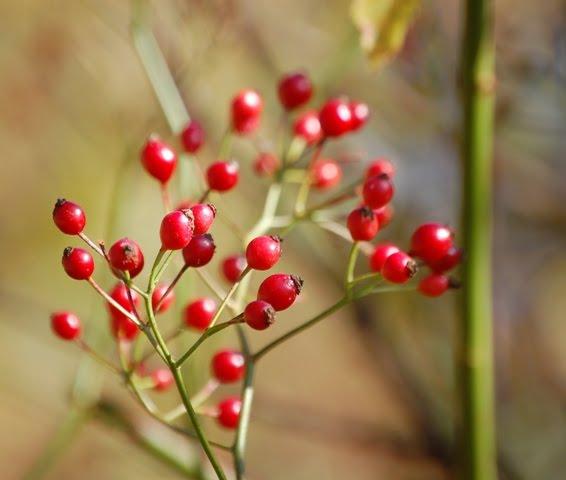
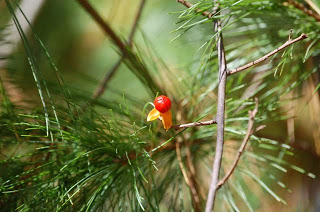
 Red berries
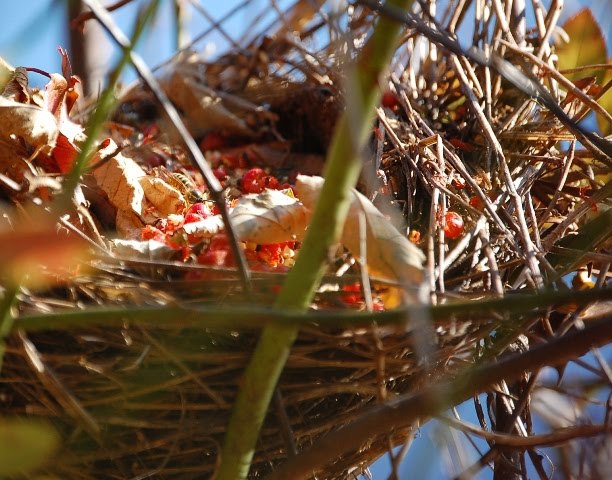
 Bee in nest
(click on photo to enlarge)
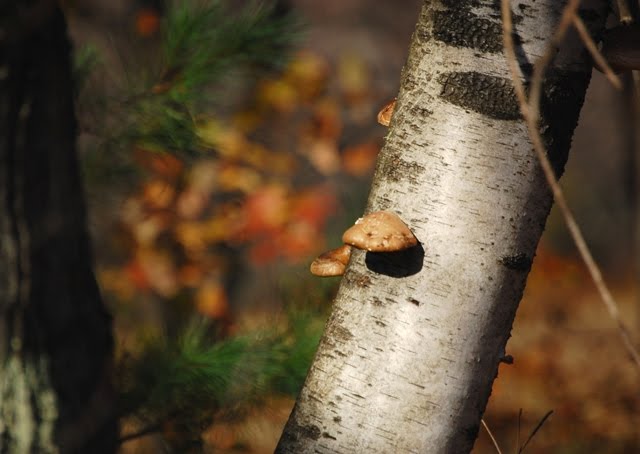
 Mushrooms on a birch tree
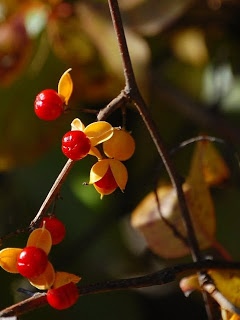
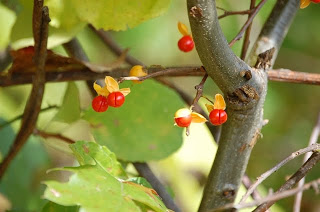
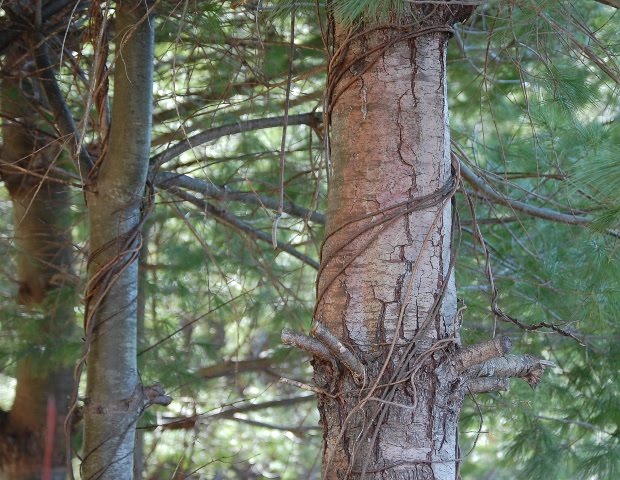
 Bittersweet
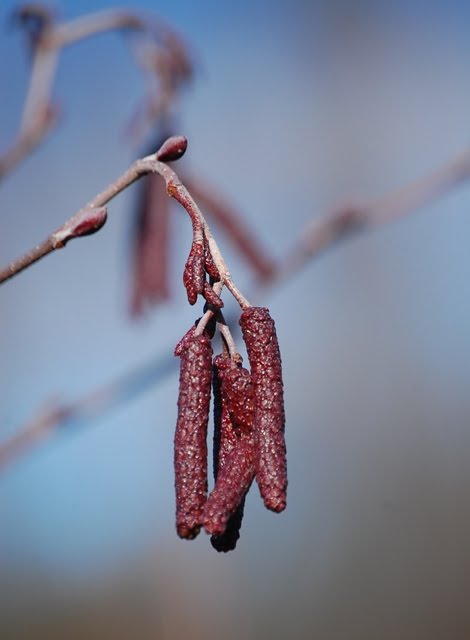
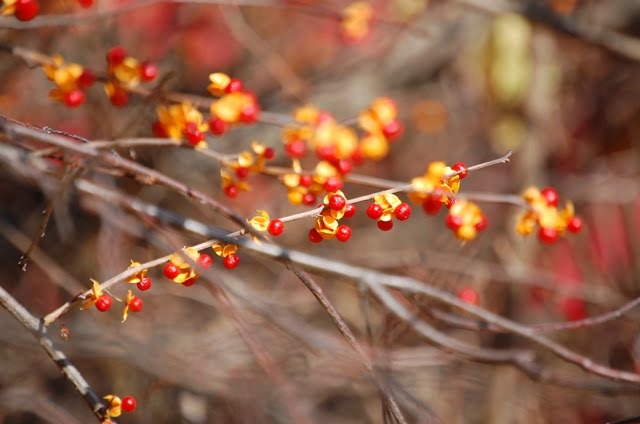 Going to seed
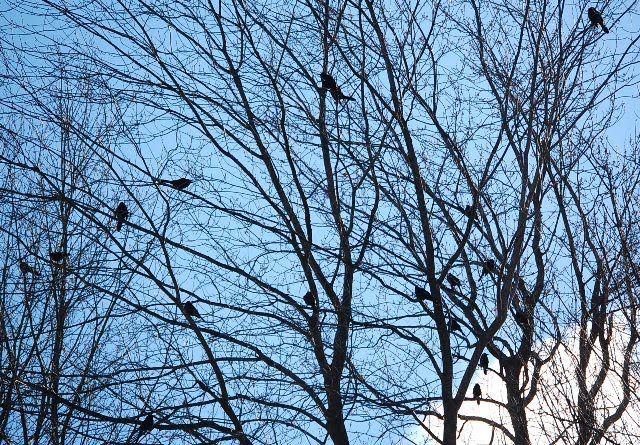
 There were lots of birds – this group of about two hundred (really) causing a cacophony.
It made me think of Alfred Hitchcock’s “The Birds.”
 Not sure what the bird is but perhaps a reader will know it by this silhouette.
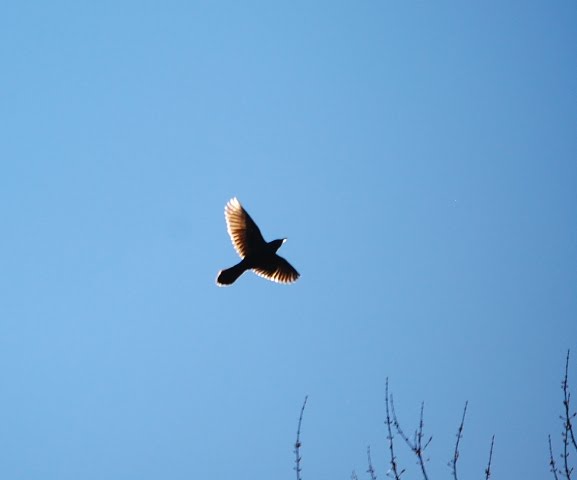 Not much a formation here…a haphazard group!
Perhaps another clue to what bird this is.
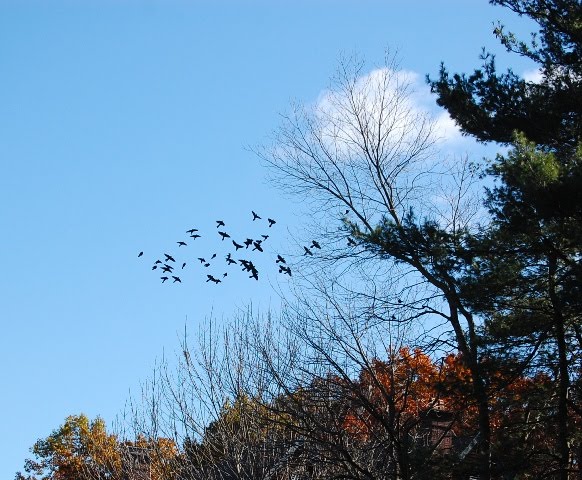 At least five trees around me were stocked with birds in the quantity shown below. They had been far out of sight – I could only hear them, till I got to within about 200 yards of them. Then they flew out of the woods and filled the trees just above me….eerie…
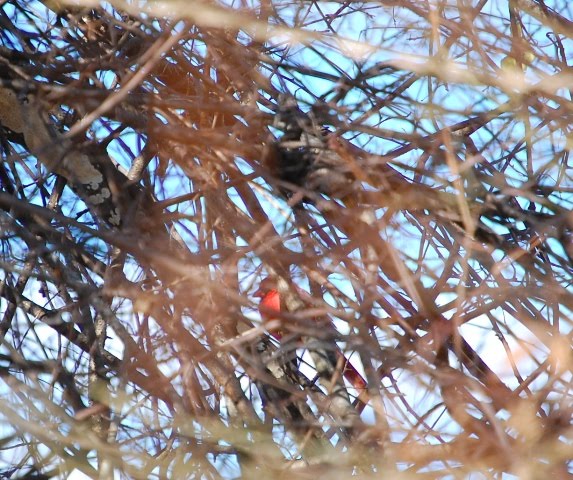
 Below is how I often see birds (in this case a male cardinal) – through a maze of branches. But this is what I like about what I see on my walks. And it is this that inspired the title of this post. What You See Is What You Get when you shoot photos at the pond. There’s no set-up, no lights, no posing, not the enticement of a feeder nor the constraints of fencing.
  Berries gone by…
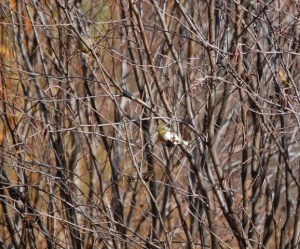
 American goldfinch showing molting fall colors?
Or perhaps a tanager molting.
 I hope you enjoyed what I saw in a day at the pond.
 I hope you enjoyed what I saw in a day at the pond.
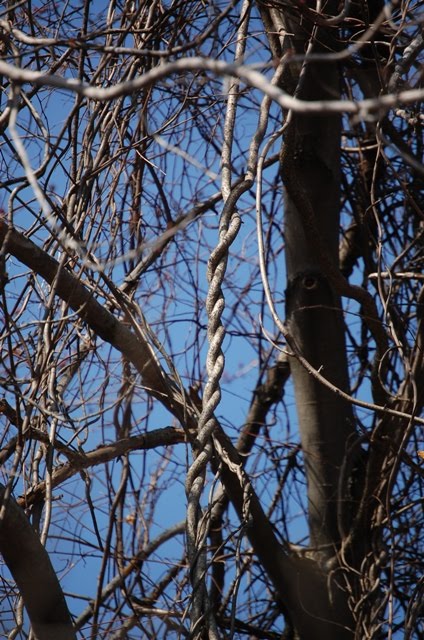
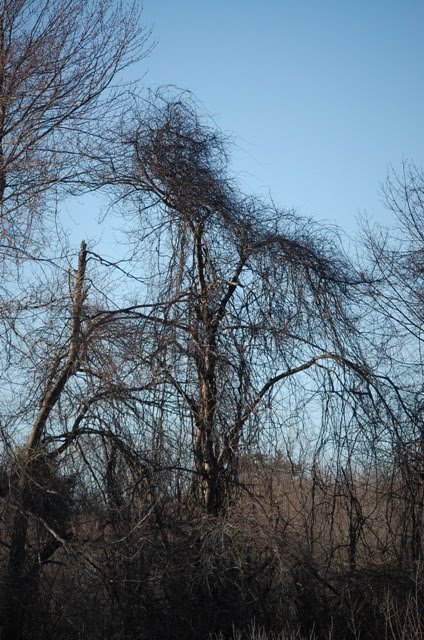
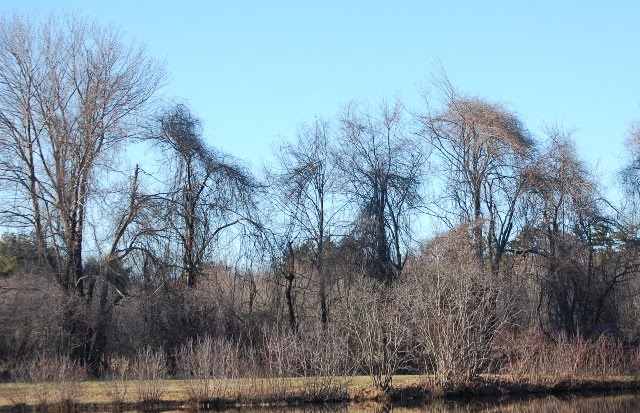
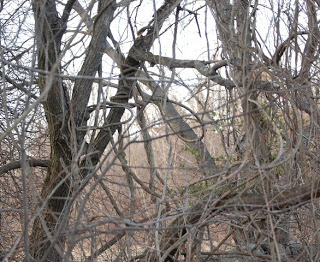 But the mass of their weave, as shown below, indicates how out of control and overpowering this plant has become.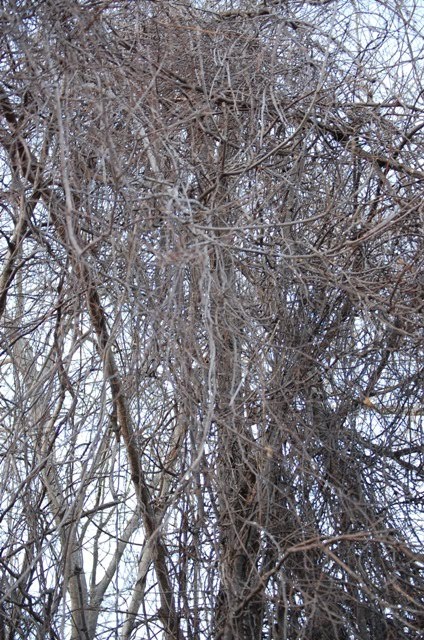
 SilverLining