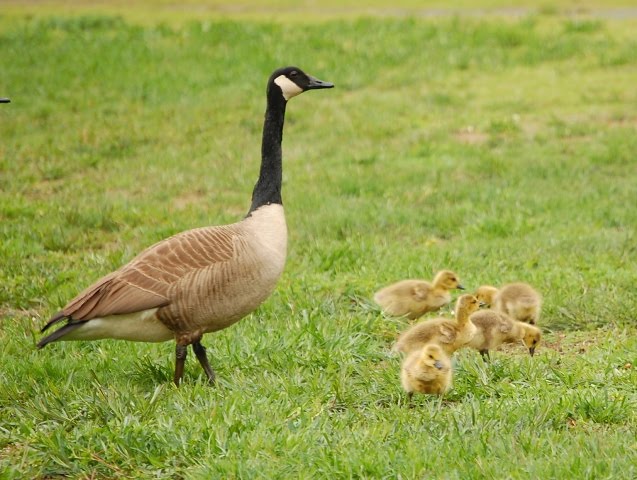
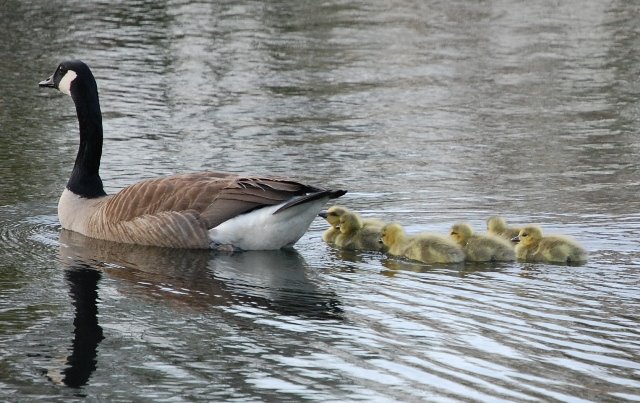
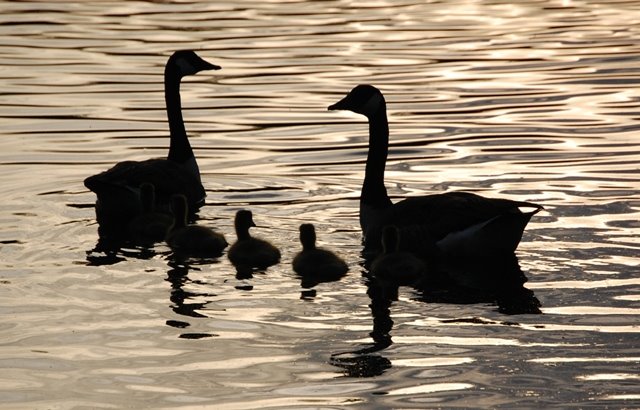
 A month ago, the Canada goslings huddled together and stayed close to their parents at all times. To see the goslings was to see the parents, and vice versa. Under the watchful eye of their mother, they’d graze in the grass (above). And below, as their father kept a watchful eye for their safety, they had grooming and other lessons from their mother.
 This is simply the way it is for weeks as the young are raised.
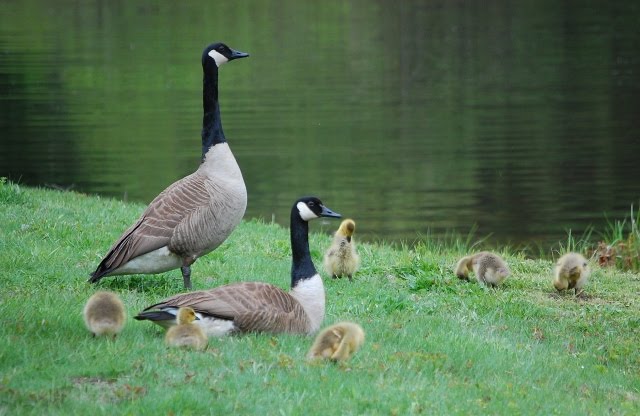 So, imagine my surprise one day when on my second lap around the pond, the parents sat in complete contentment, not a babe in sight! I could not imagine that (though I wondered if) a hawk had swooped down and carried the six fluffy goslings away in the ten minutes it took me to walk around the pond and return to where I’d just watched them all graze in the grass.
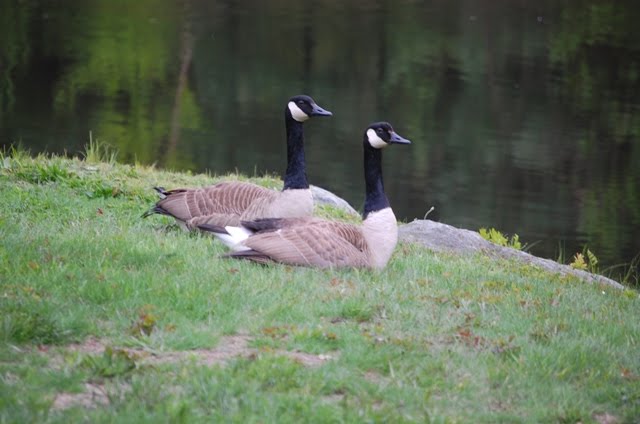 I thought they might be over the embankment, but I looked and they weren’t. I thought perhaps this was another pair of Canada geese, that the little family was undercover elsewhere. But the area was wide open and no other geese, large or small, were in sight.
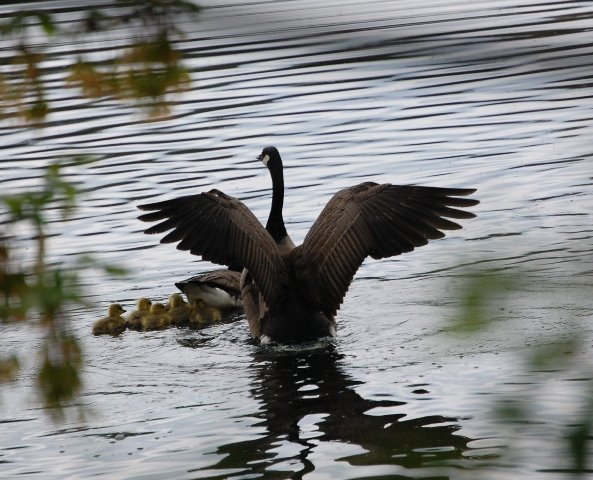
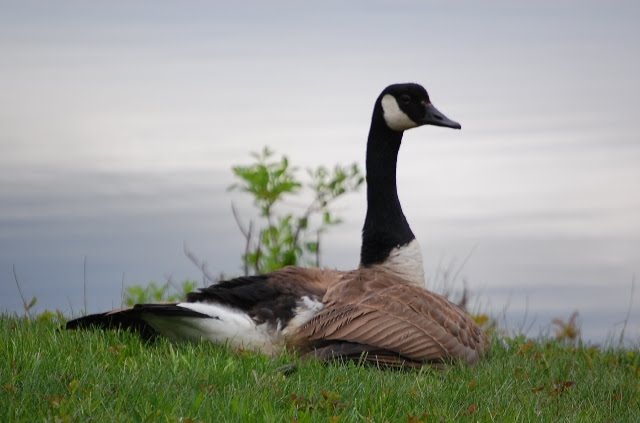 Then I noticed the wing of the female was at an odd angle. Again, I wondered if there had been a battle with a marauding large bird and that the mother had been injured in the fray.
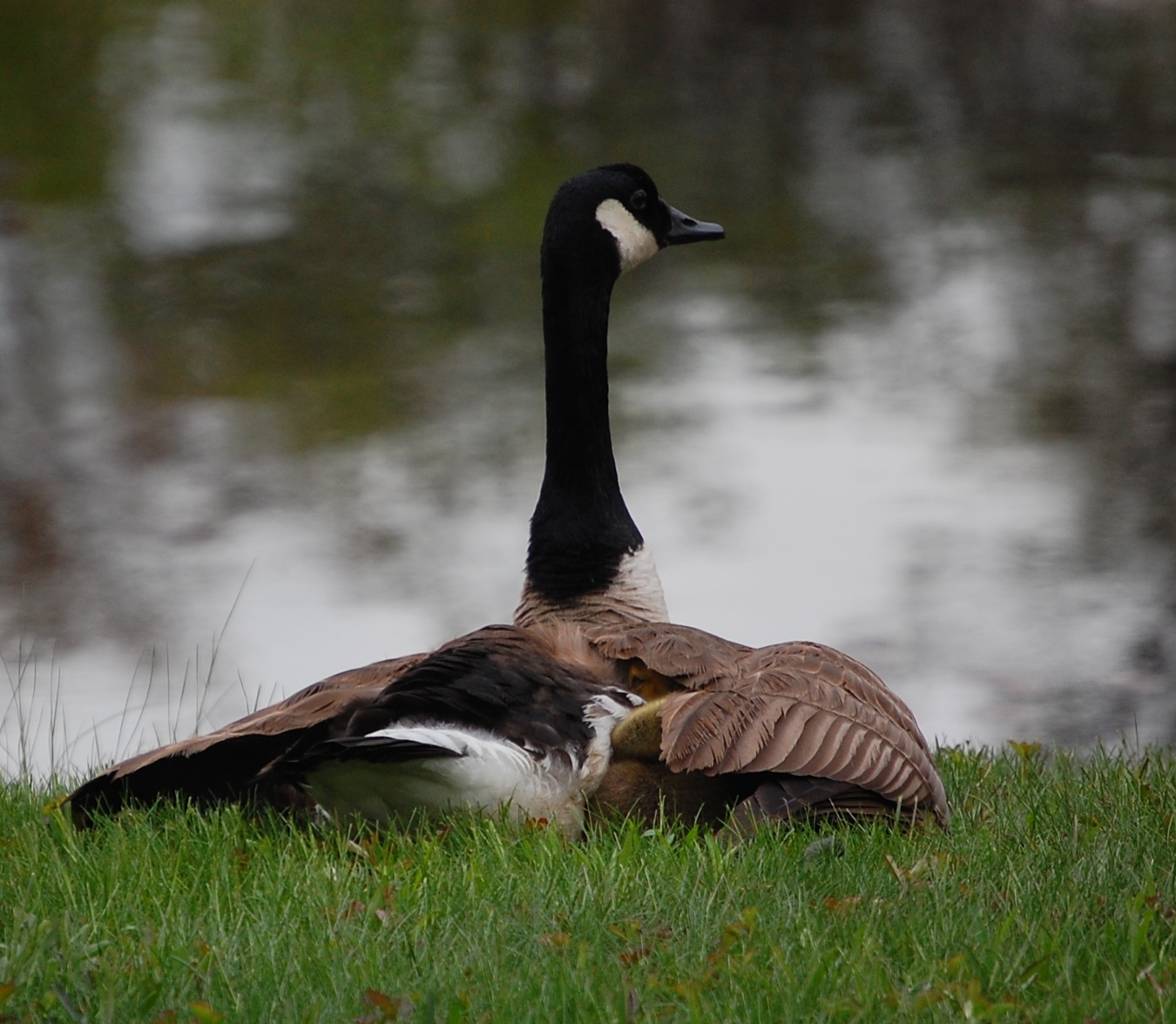 But I soon became aware that there was activity under her wing and lo –
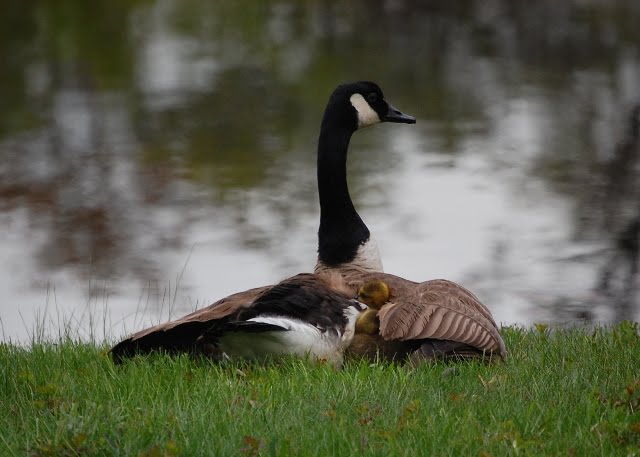 here were the babes! Were they beneath her wings for a nap? For protection? For a time-out?
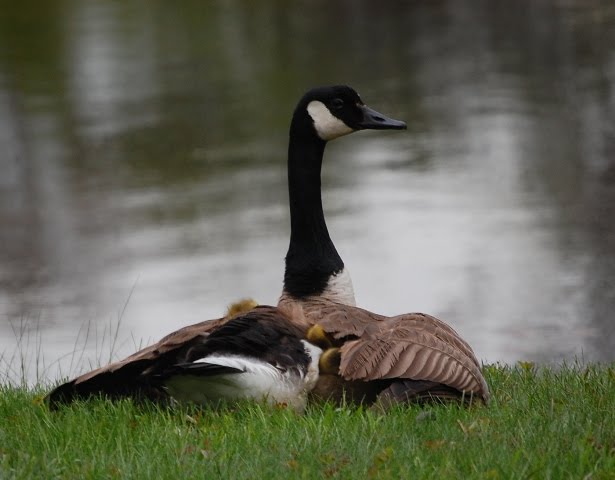 Whatever the reason, their frisky natures kept revealing bits of their sweet baby yellow fluff.
 A couple of days ago, there was a violent thunderstorm late in the afternoon. As I passed by a window in my house, out on my lawn I saw the image below – a wild turkey sitting stock still in the open, with a chick under its wing. Lightning and cracks of thunder raged overhead, but the parent stayed perfectly still, with its wing protectively around its young.
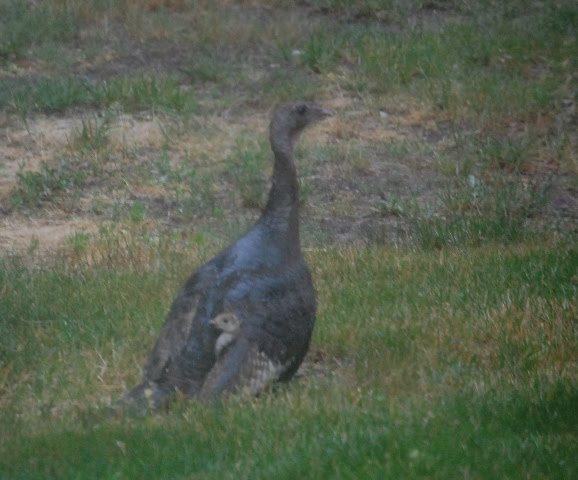 Looking out the window at this wild turkey, I remembered what I’d seen a month earlier – the behavior of the mother Canada goose, which at the time made no sense to me. Then, from my childhood, I remembered occasions on summer afternoons when my mother would call us in from the yard. She’d say that we were going to practice a fire drill. She’d send us to our beds and ask us to lie still, as if it were nighttime and we were asleep. We’d obey. Then she’d do the same, lie on her bed as if it were nighttime. From her room she’d call, “Children, there’s a fire!” Following the instructions she’d given us, we’d orderly march from our rooms, down the hall, through the kitchen and out the front door. We’d cross the lawn and meet under the designated lamp post for a head count.
..under the shelter of her wing…
Maternal Instinct




 SilverLining
