
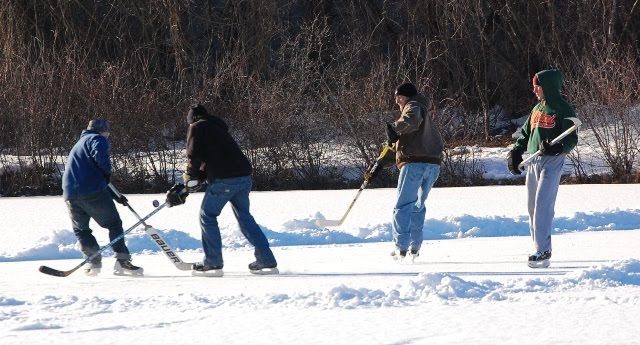
 For all of my childhood, there was a pond behind my home. In the winter, though not every winter, we skated – my brothers, sister, the neighborhood kids and I. Hockey sticks, pucks, and ice skates were common Christmas gift in my home. In that day, it was unusual, most unusual, for a girl to have a hockey stick. But I did – though briefly, since an older brother broke his own and in desperation borrowed my small sized stick and then had a brief time of play with it before it broke under his much stronger play.
 A New England winter alone does not make a season of good outdoor skating. There needs to be an orderly confluence of nature’s elements to create a smooth ice surface. If snow falls on a thin layer of ice, the season can be ruined. Or if a thaw comes along and softens the ice, then rain or snow falls, the surface can be ruined.
 Long freezing periods under a blue sky early in the season is best. In the recent years that I’ve lived by this pond, I have seen just one good skating season. And it was this past year.
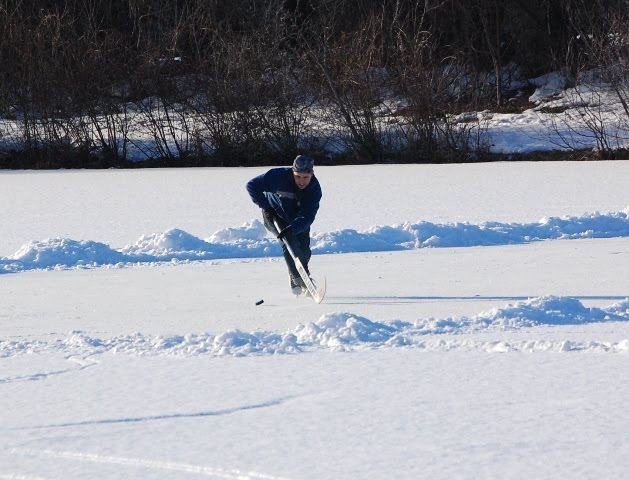 We really did not have any snow to speak of till January. But we had lots of cold weather through December. So, when the snow finally came – in storm after storm after storm, it dropped onto a solid and smooth ice. Shoveling was required – but for those eager to skate, the shoveling is not an unpleasant warm-up exercise.
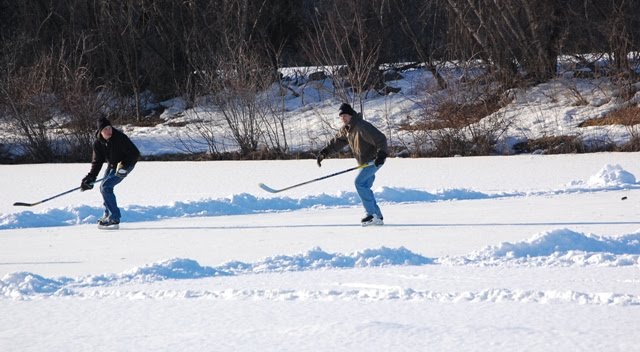 These photos show young men in a pick-up game of hockey. I’d forgotten the sound of the sticks clacking on the ice and the crack of a slap-shot (my specialty as a child) and the skate blades’ scratchy shushing sound. All these noises echo off the stark cold trees, creating a sound ambiance unique to outdoor skating that’s broken only by the whoop and holler of the players.
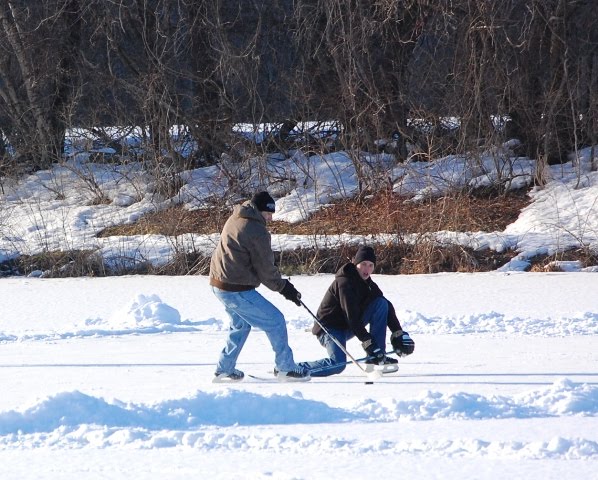 A few posts back I wrote about my own trudge across the pond. This year’s cold, which is finally leaving, did offer the advantage of winter on the ice.
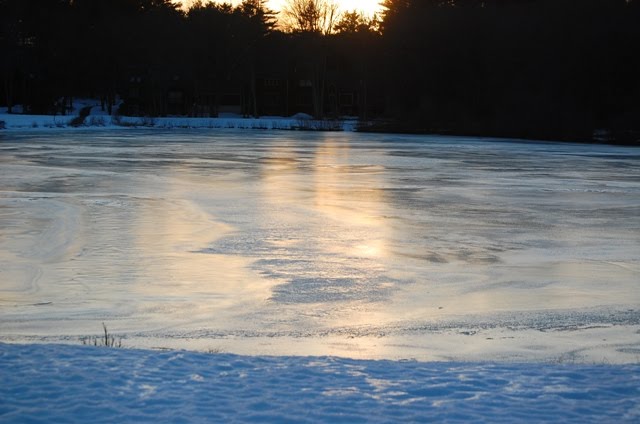 Above, the winter sun sets on the frozen pond.
 SilverLining