Great Blue Heron

At last, the great blue heron has been seen at the pond. I had started to think it might be a year when it would not appear at all. But I encountered it for the first time yesterday. The weather was amazing – warm, dry and sunny – and, as a result, I lingered and kept walking the path. The heron lingered for reasons of its own.

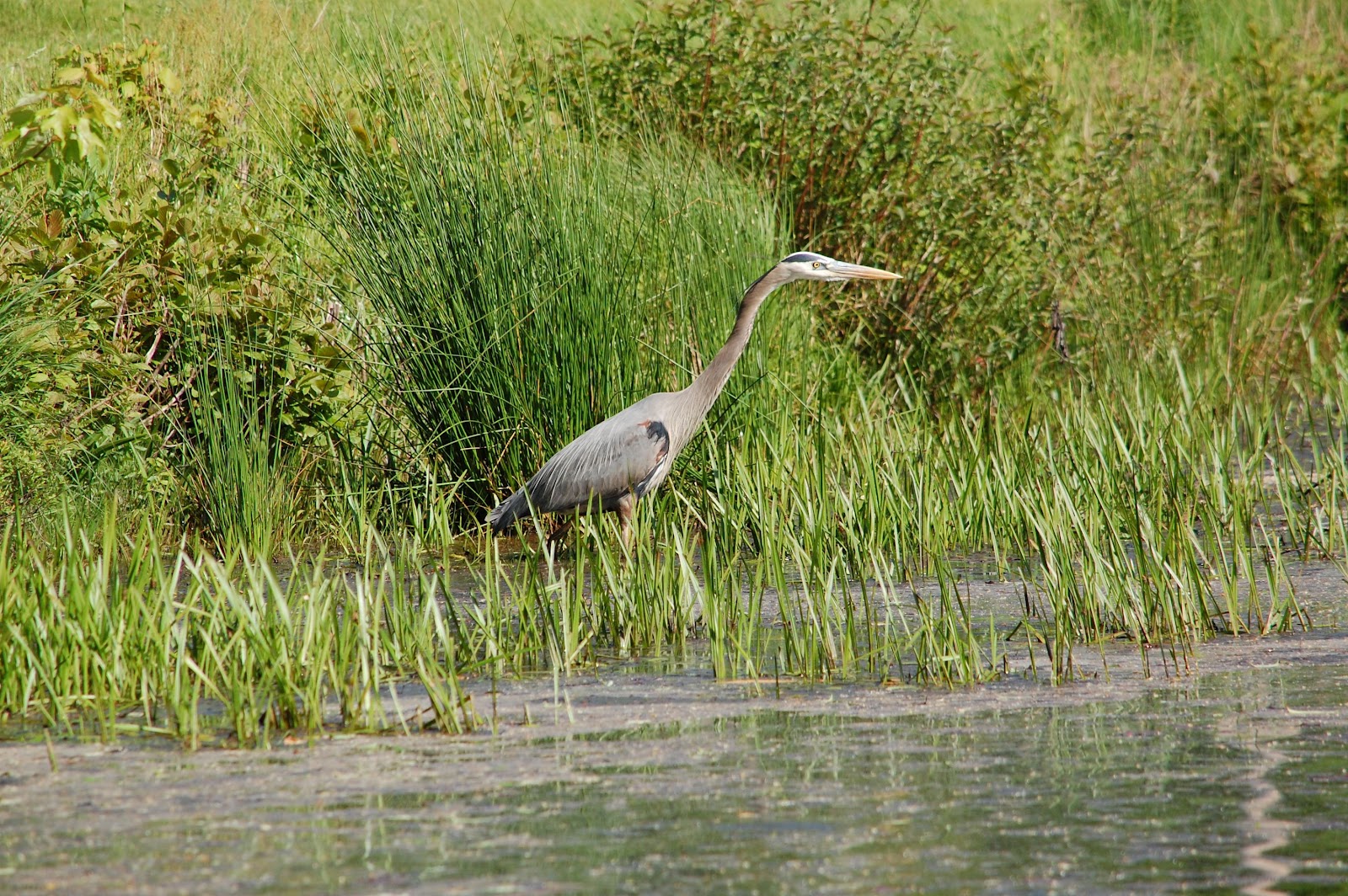
Because of its prolonged stay, I had the opportunity to take many photos. It first settled at the far end of the pond (above) where it took its predatory posture – stock still. I suspect it had its eye on a tasty something, but before it had a chance to strike, it was frightened off by someone on the path. This was the theme of the heron’s afternoon as so many people were walking (themselves and their dogs) as well as running the path that circles the pond.
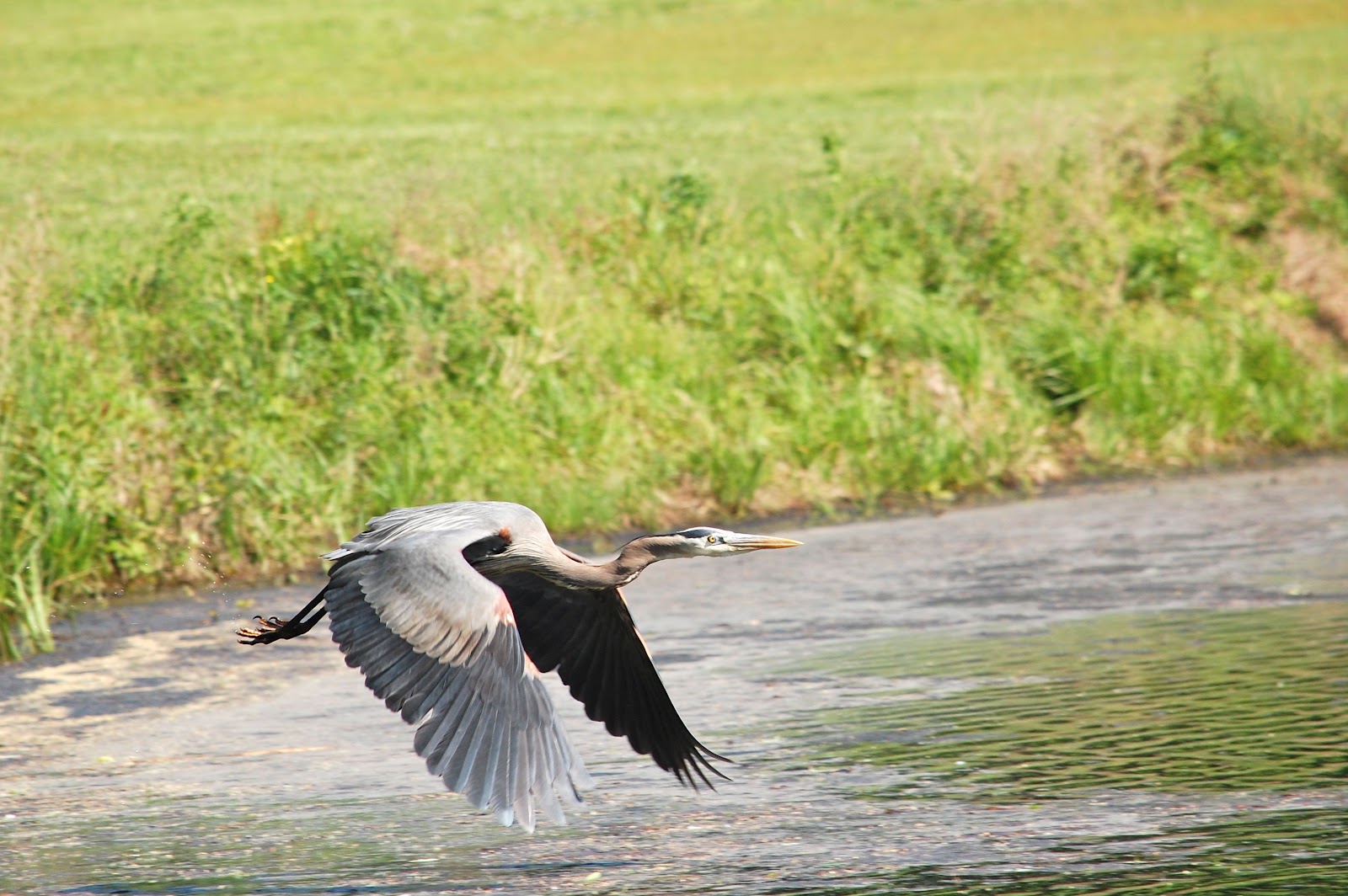
A few months ago, a fellow photographer at FineArtAmerica commented that my photos looked dark. So, I’ve been trying to manually set my camera (a Nikon D40 with a 55 – 300mm Nikkor lens) for various light conditions hoping to lighten them up. This is risky business as I lose so many shots to over or under exposure, as, from shot to shot, light conditions change – there being nothing static about the light, minute to minute or place to place, in this pond setting. Some of the heron photos here were wing and a prayer clicks.
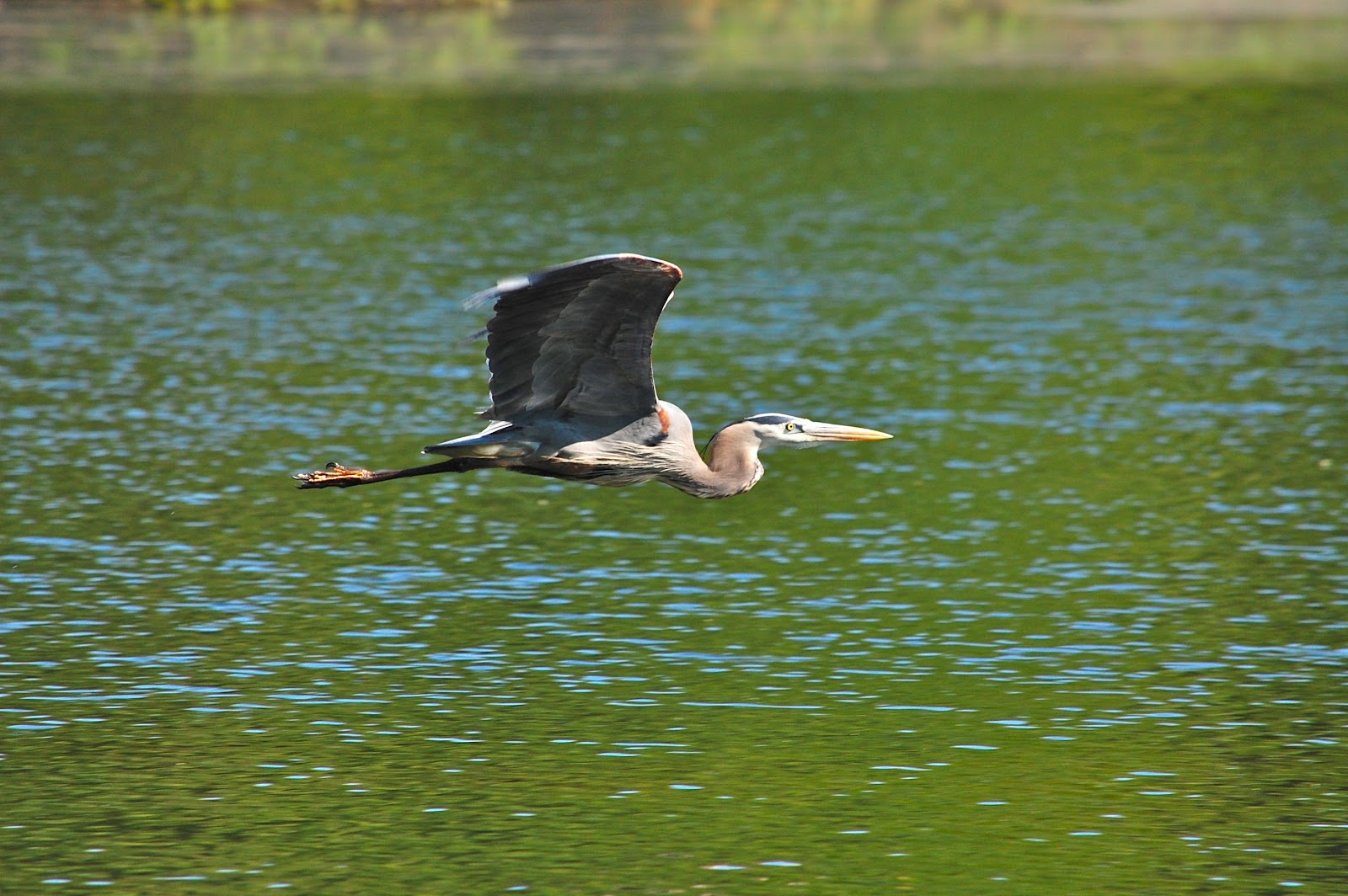
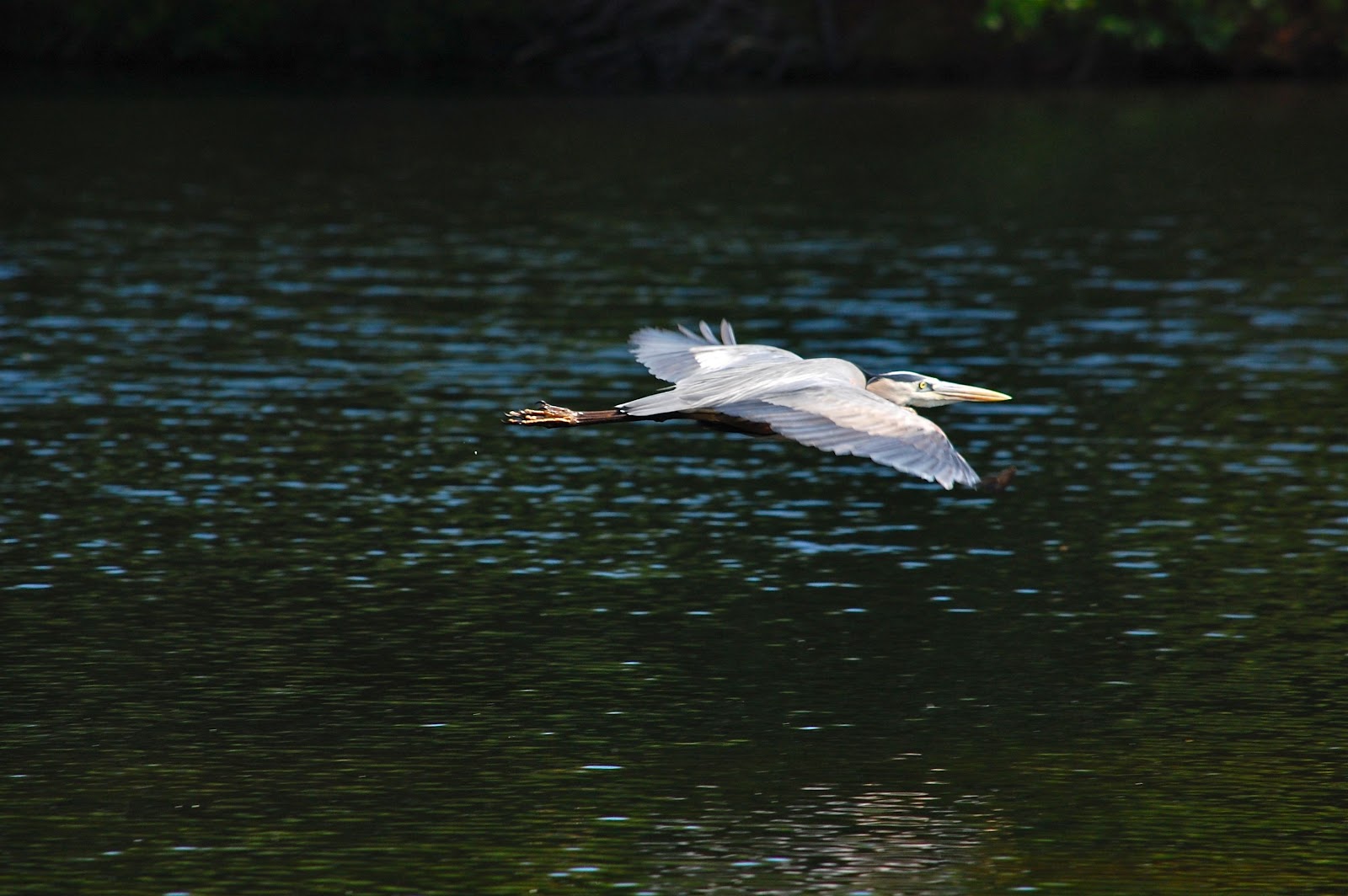
Camera light setting is tricky, as lighting is tricky for the camera. I think each of the photos – above and below – are beautiful. They were take a second apart. I didn’t change any settings on the camera. But apparently, the light conditions changed just enough to cause both of these images to show as dramatically different and strikingly alike. The heron had traveled perhaps ten feet in that second and was flying into the setting sunlight. I think it crossed a line directly in front of me (and the camera) where, as I tracked the bird, new light illuminated it. I think the bird was gaining elevation as well, so the second shot was angled higher.
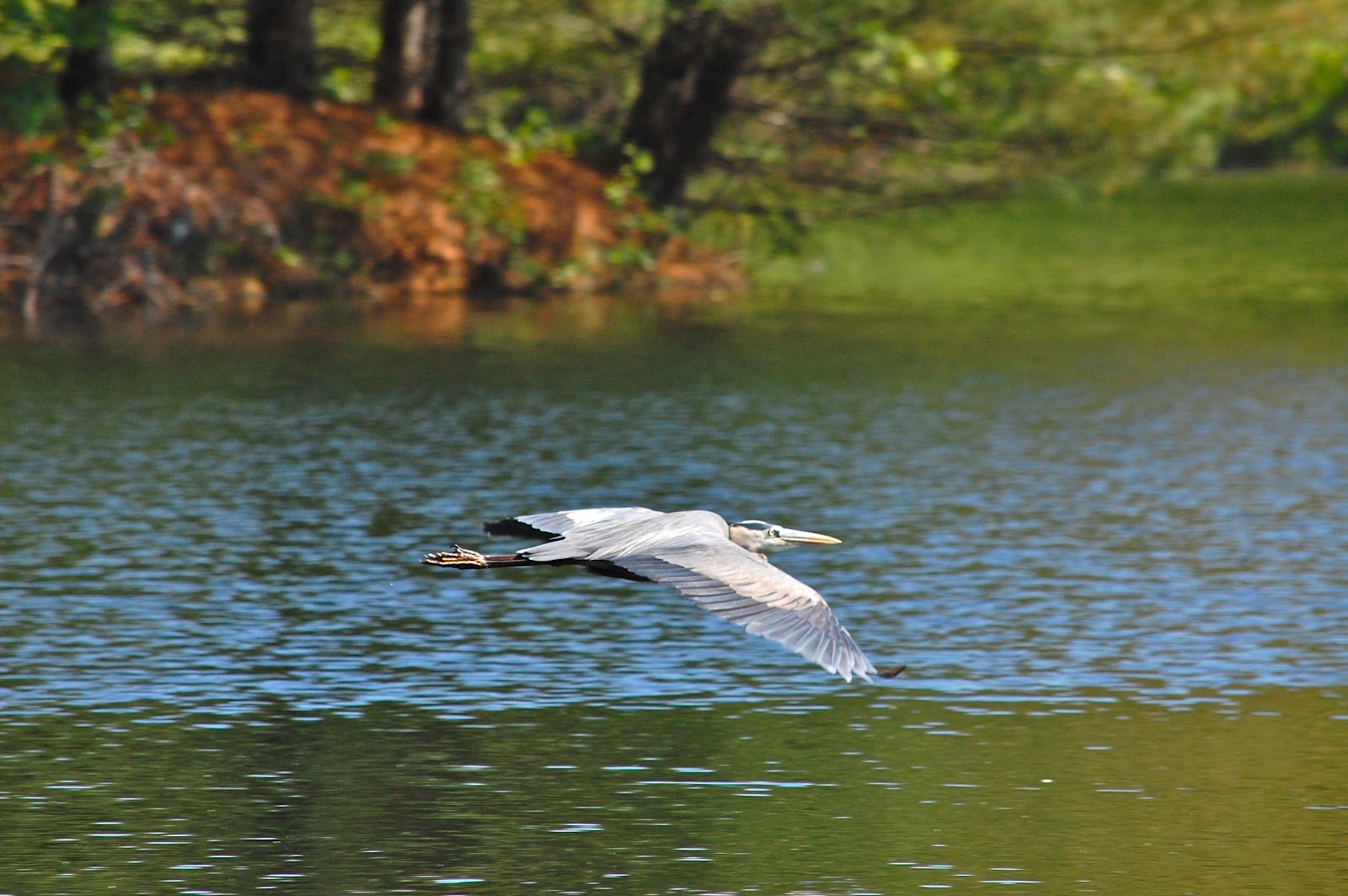
As the heron proceeded to the right (below), the shots became increasingly more overexposed as the sunlight was brilliant, too bright for the manual setting I had chosen for the darker, far end of the pond from where the heron had taken off.
But let’s not get bogged down on the technicalities (about which I know precious little…), and instead just enjoy these pictures of the heron!
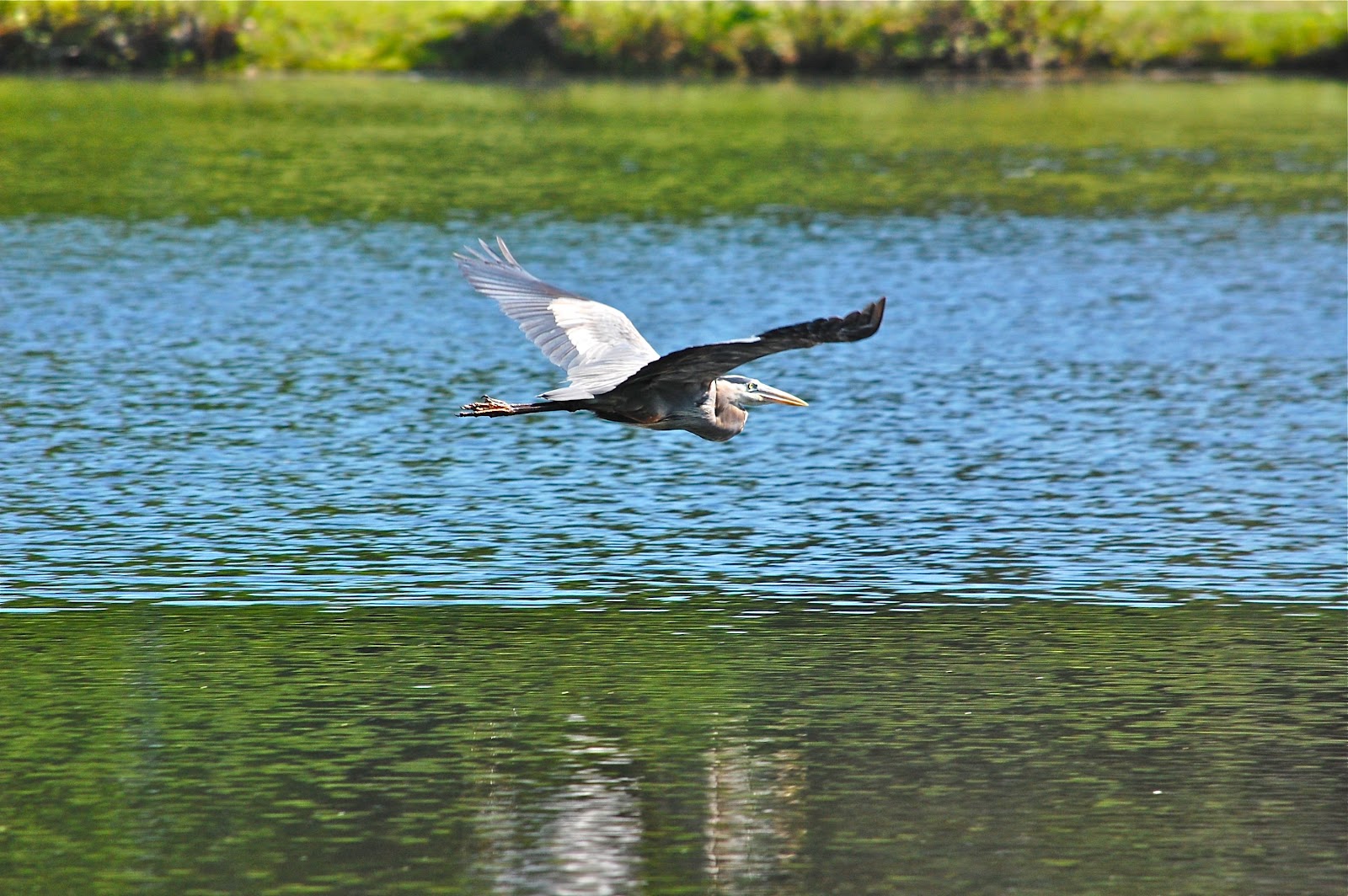
I took all of the photos in this post over the course of two hours and I have the sense this could be the best reaping of heron images of the entire season.

Here are a few great blue heron facts: 
the weight of the bird is 5 to 7 pounds (I would have guessed at least double that), the wingspan is 5.5 to 6.6 feet, the lifespan is 15 years on average.
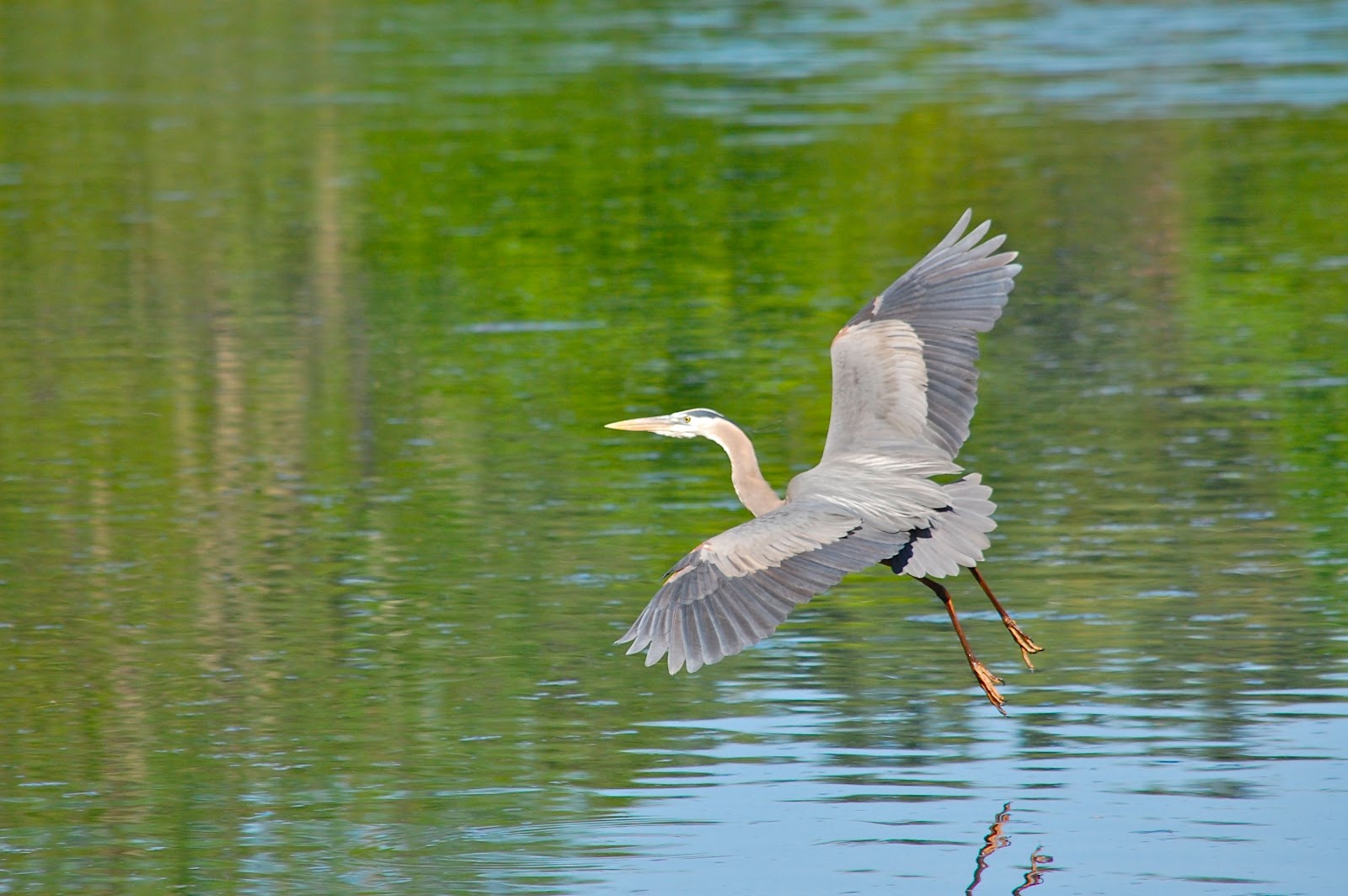
What I love about the image below is the graceful line of the left wing. See how the visual variation in thickness enhances what we see as motion, undulation even, in the wing. This bird has a beautiful elegance!
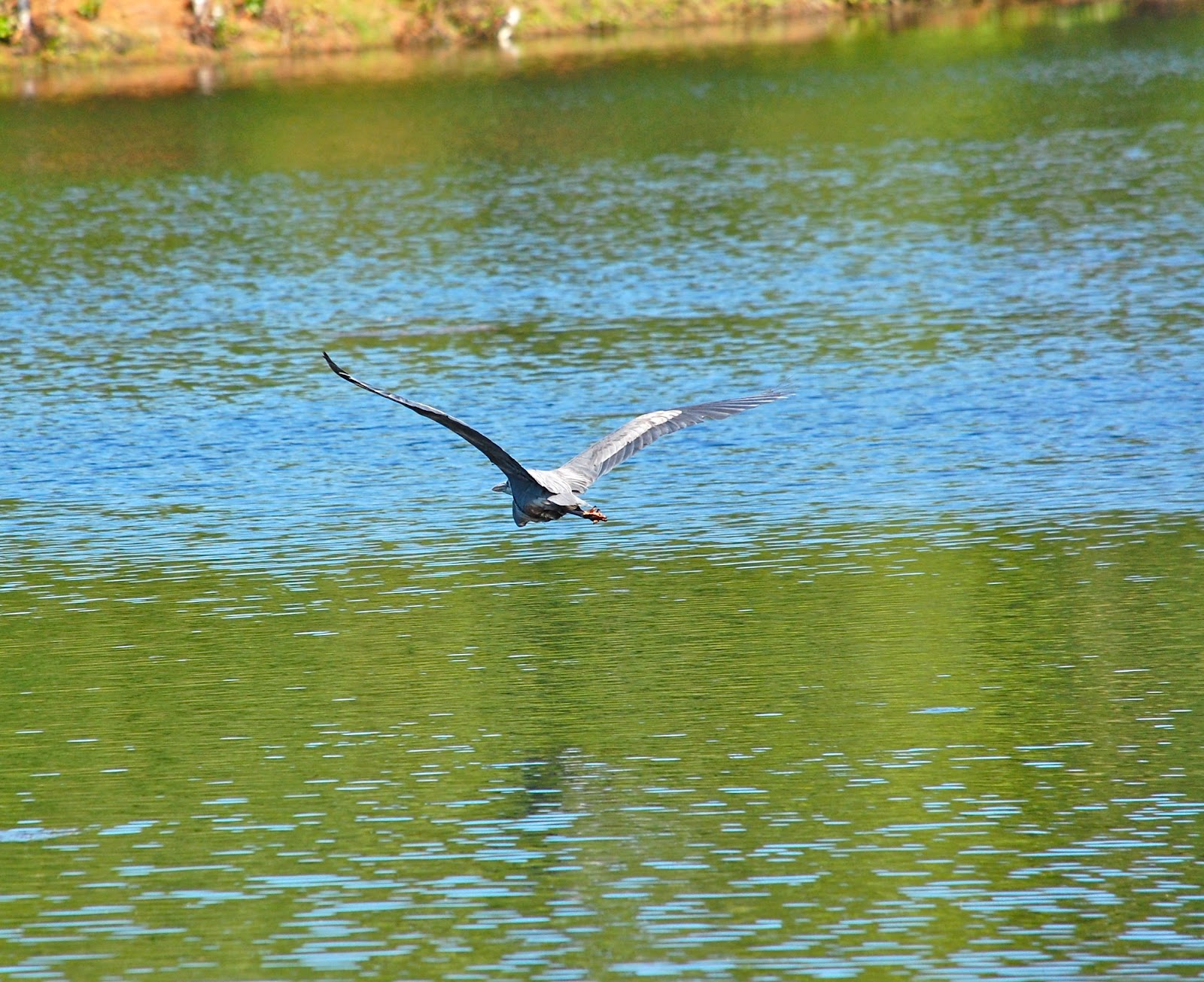
(Click on any of the photo for full screen viewing and scrolling through them all.)

A Time for Every Season Under Heaven

Mum and me BI
I’ve been distracted from blogging for the past several months but hope to return to it now. 2011 brought unexpected sorrow for me. Though my mother was 89, her death in November caught me by surprise. Throughout all of last year, my care for her increased and took me from my usual schedule. I’m so grateful I was able to attend to her. But her loss still has me so sad. She was a great person in addition to being a wonderful mother to my siblings and me. I wrote about her at my blog sublimedays.com.

I look forward to sharing more about the pond with you soon.

Pond Images – June in New England

As I walked the dog today, in twenty minutes I took these photos as I circled the pond.
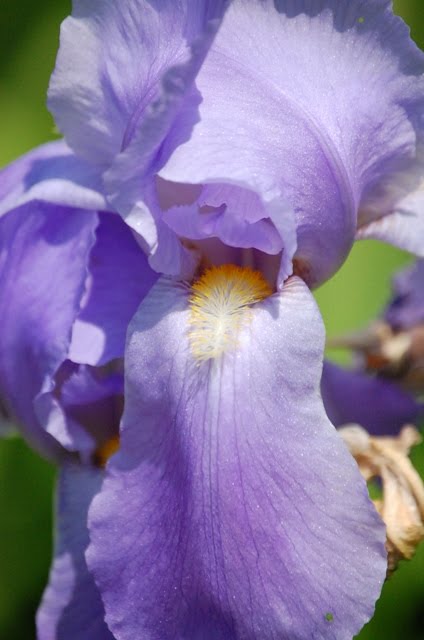
The iris is alongside my driveway.
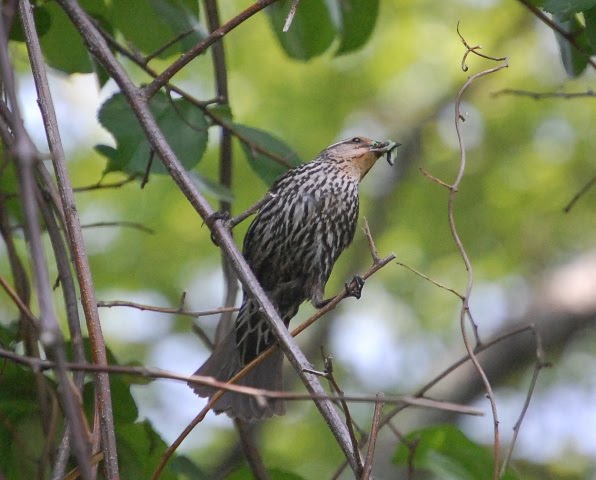
Female redwinged blackbird with worms in her beak!
(Click to enlarge the photo. Use your back arrow to return to the post.)
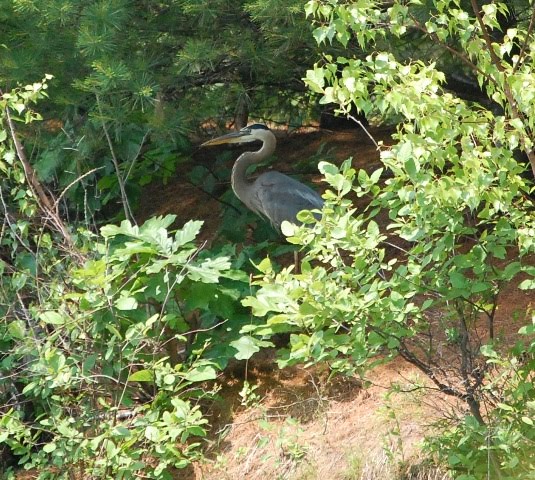
Great blue heron on the island shore.
The blue-eyed grass below is a sure sign of the spring-into-summer time of year.
The Elis skimmer has hatched.
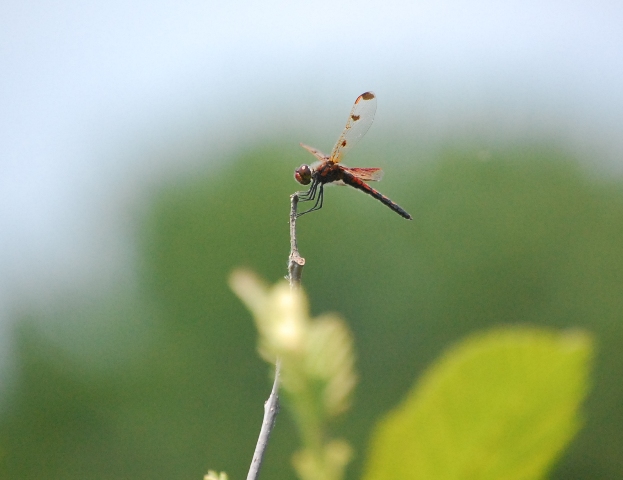
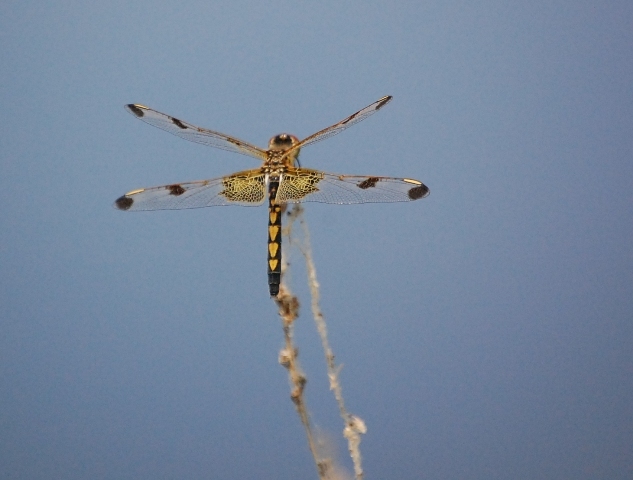
And below, a gorgeous dragonfly I don’t recall ever seeing before. I can’t find it in my books so will name it Tiffany for the beautiful stained glass look on its wings, close to the body.

The Great Blue Heron


What struck me most when I first saw a great blue heron in early spring was her height, about three feet, and her color, which is slate blue. I can’t think of another living thing in nature that has her color, a color that could be considered dull. And, although it contrasts to every shade in its surroundings, its dullness helps it to blend in.

Now, after more sightings, and with those features absorbed in my mind and familiar, what leaves me dumbstruck still is her wingspan and the structure of her wings. While they lay flat by her side when not in use (as they were the first times I saw her), they unfold for flight into perhaps five feet in span, and they have a remarkable width. The wings also have a crook or elbow, leaving the outer expanse to appear limp as the wing rises in stroke. Watching them in action, you can imagine the power of the thrust forward as the air finally catches under the outer segment of wing on the down stroke.


It is a treat to be near enough to see her awkwardly launch her body as her wings stretch out and support her in a motion that could be describe as anything but graceful. Still, as gracefulness is absent, dramatic power is present. She makes grand sweeping flaps of her wings which propel her large body on a slight incline into the air. There is no rocketing into the heavens for this bird. With effort she lifts and skims over the water with a slight, incremental rise with each beat of the wings.

As I study the creatures of the pond, I learn things about myself as well. For instance, I attach gender to some of the individual animals.

If the turtle is ‘he’ it is because I view him as old, and as the keeper of the history and lore of the pond. This I attribute to a male role, perhaps because of my, admittedly, inaccurate default to the ‘medicine man’ or shaman as being only male.

To me, the blue heron is a she, like the female monsters of Greek mythology, such as the Medusa, Scylla, and Charybdis. She leaves a trail of destruction whenever she’s at the pond and any small living thing within her reach is at risk of death.

There are times I know she’s nearby not because I sight her but because I come across a dead animal or a broken nest on the ground. Often, too, there are feathers scattered about in one area and I wonder if there has been a fight. When she’s in the vicinity, the birds are frantic, exhibiting erratic flight and calls of distress. Their cacophony is my first clue to keep an eye peeled for her. I have walked to within six feet of a bird when the blue heron is around. The bird is clearly overprotective of her nest, which I know to be in a tree just above us, or she is confused with the loss of a newborn, which I’ve seen on the ground.

I thought it was my lucky day the one and only time I’ve seen a snake at the pond. I figured I’d come upon it at just the right moment, when it dared to venture from cover. Again, it seemed I was able to get much closer than I imagined a snake would allow. Once, in the 20 or more minutes I watched it, it raised its head in warning. And, once, it slithered, but for no more than ten feet. And, there it died. It was injured. Its neck was crushed. As I had seen the heron fly away from the pond, on a flight path just above where I found the snake, I had to wonder if she had had it in her grip but lost hold as she flew away after I startled her.

The first carcass I ever saw at the pond was that of a fish. I had not yet put together that these sightings of destruction coincided with the presence of the heron. I puzzled a long time, wondering how a dead and half eaten fish got several feet up onto the shore.

The day I took photos of the snake, the heron perched in a tree some 200 yards from the pond after I had inadvertently frightened her and she flew off. Stubbornly she sat, even allowing me to get close enough to capture her in a photo. I suspected afterwards that she was waiting for me to go away
so that she could finish her snake lunch.

In my observations of the pond I know I shouldn’t allow emotion to influence anything I see. I think excitement about things I see is alright. And, perhaps disappointment might even be okay, such as when I go days without seeing a turtle. But, should I dislike the heron? As thrilling as seeing her is, I don’t like her. As soon as I spy her, I’ll hear myself mutter, “Well, look who’s here, Trouble.” I guess all’s fair as I suspect she thinks the same of me when my presence interferes with her feeding.

The pond is a little cosmos of a natural hierarchy, where the great blue heron is king, or, well, queen.