
**********************************
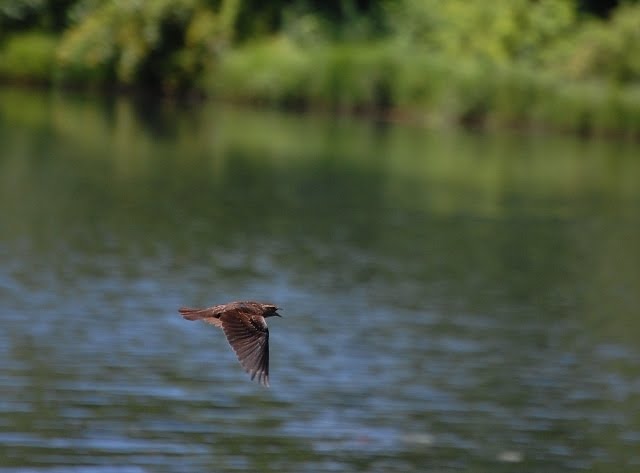
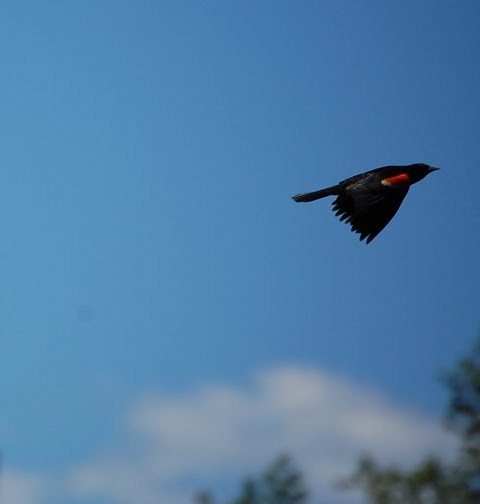
UPDATE: Today, the day after I posted these images and the text below, my thoughts that there were Red-winged Blackbirds fledglings in some of the images below was confirmed. As I walked around the corner where the birds had been yesterday, the male was alone in the lawn. As soon as he saw me, he flew directly toward me and into a thicket of trees to my right. His call was constant. In an instant, the female flew from where he’d entered the trees and she glided down into the reeds along the shore of the pond. The male came along behind her and dropped into the same spot in the reeds. Then the female/mother flew up from the reeds and back into the trees. Immediately, the male/father rose from the nesting area with four fledglings flying alongside him. They flew over a stretch of the pond, and up to where they were against a background of blue sky, then into the trees from where the female called to them.
It was perhaps the most beautiful sequence of images I’ve ever seen at the pond. I knew there was not time for me to capture any of it with my camera. So, I calmly watched the thrilling family scene that played out before my eyes, in a matter of perhaps 45 seconds.
*********************************
If you’ve read this blog before, you know that I am both an amateur photographer and an amateur naturalist. So, at any time, anything I articulate about my observations in nature, could be inaccurate. I give that forewarning as you read this post. I’m not 100% sure that the birds I talk about and show pictures of above and below, are female adult Red-winged Blackbirds or fledgling Red-winged Blackbirds. Their markings and color and size are similar. Nonetheless, the images are captivating (to me anyway).
For the past few days, there’s been a scuttle of activity on the lawn at the far end of the pond. At first I thought it was a convention of female Red-winged Blackbirds. But because the birds are a bit more petite than the female, and a bit goofier in their flying skills, I’ve decided they must be fledglings. Although, it’s likely the mother, whose markings are almost the same, is still among them and may actually be in some of the photos here.
I insult them by using the word “goofier,” because, in fact, their flying skills have been remarkable for their age. It’s just that there seemed to be an awful lot of hop/flying going on, as well as some roll and tumble landings. (Or, this could be the mating postures of the female…)
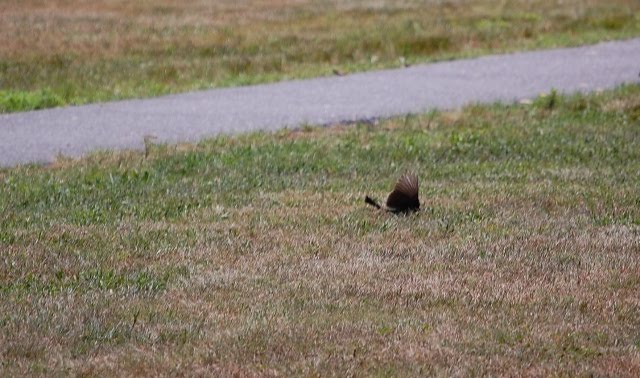
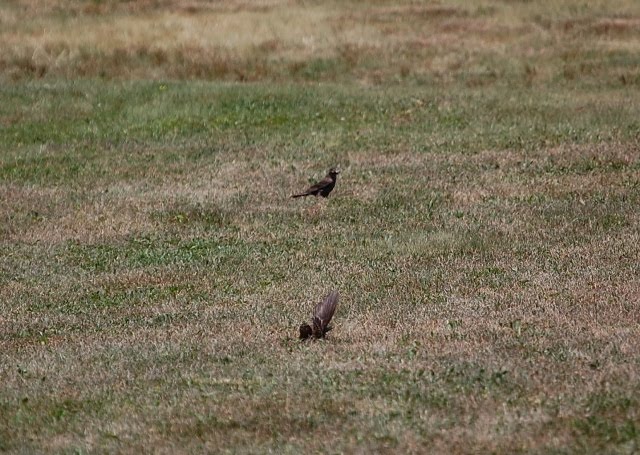
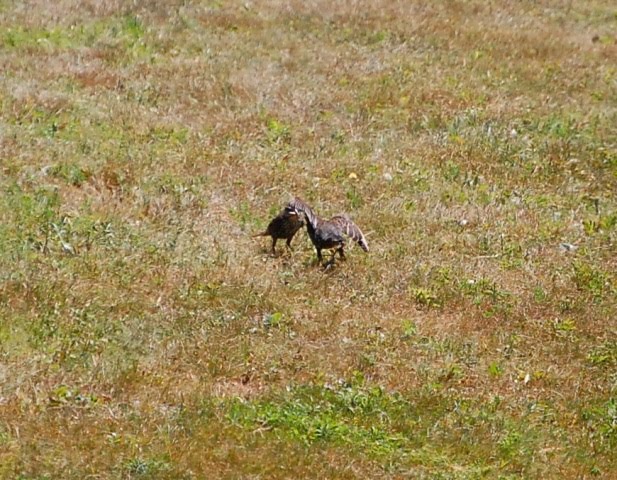 As the photos below show, whether female adults or fledglings, the wings are impressive.
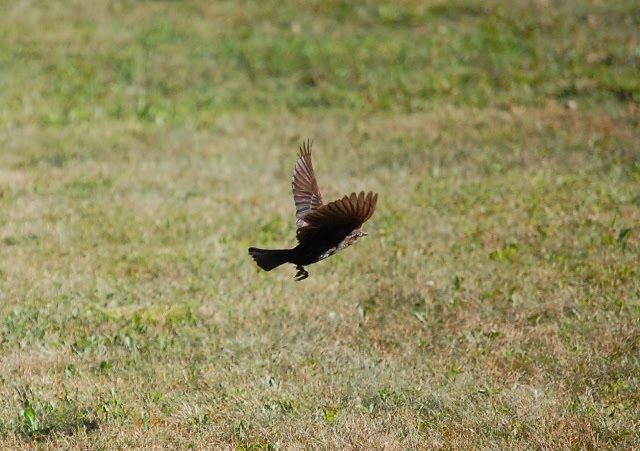
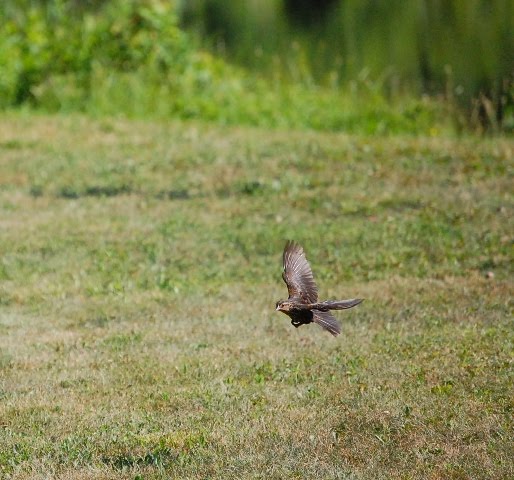
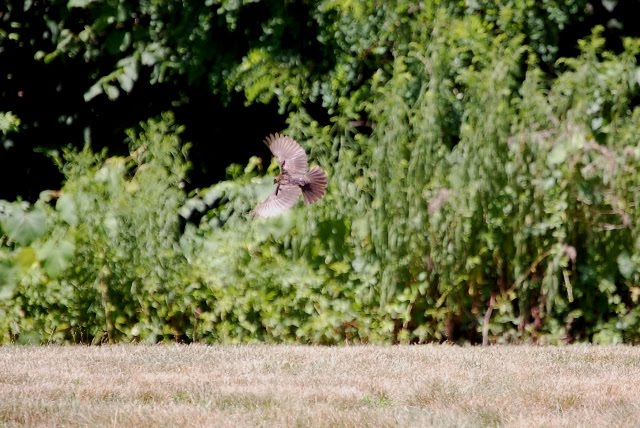
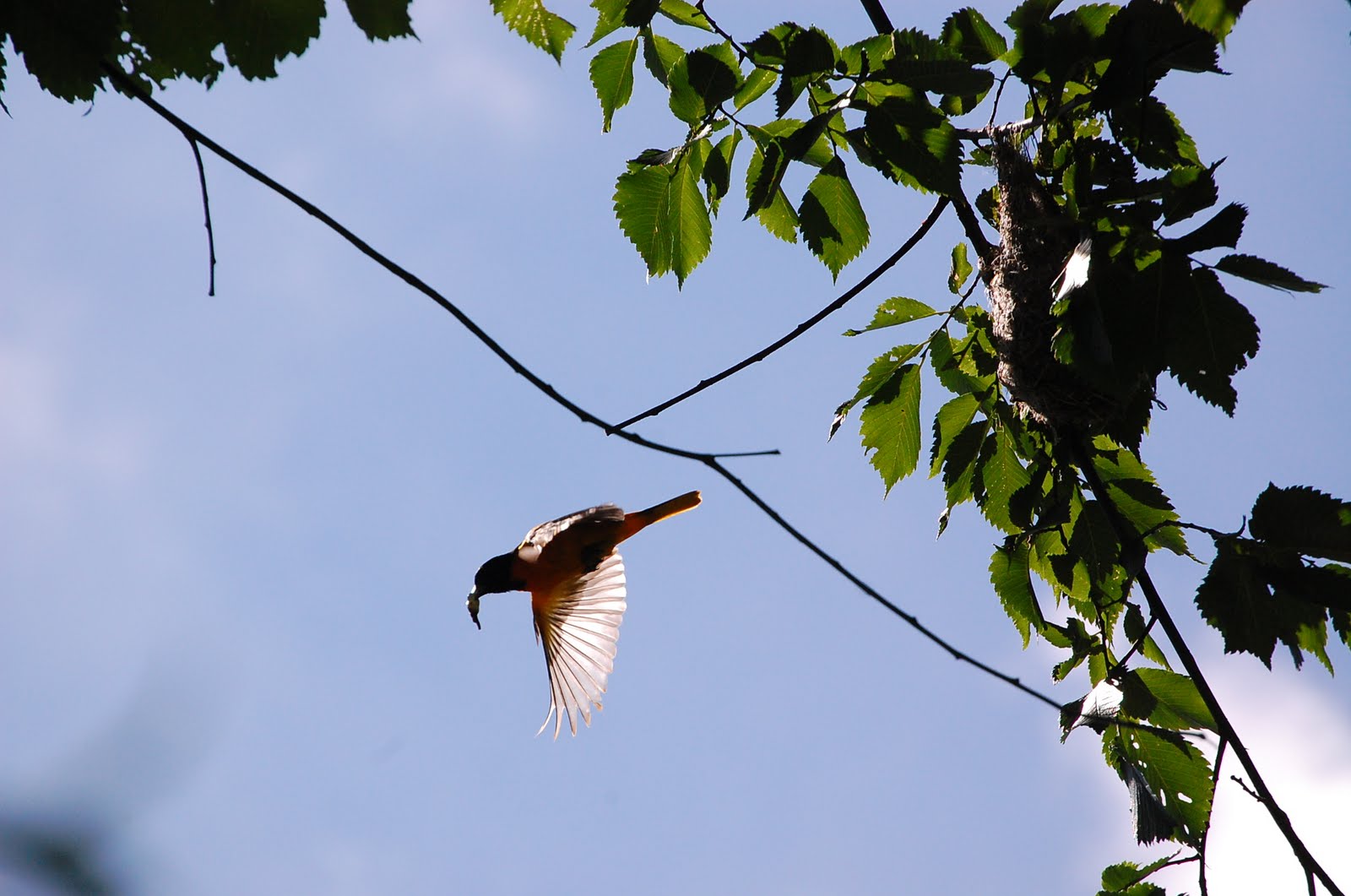
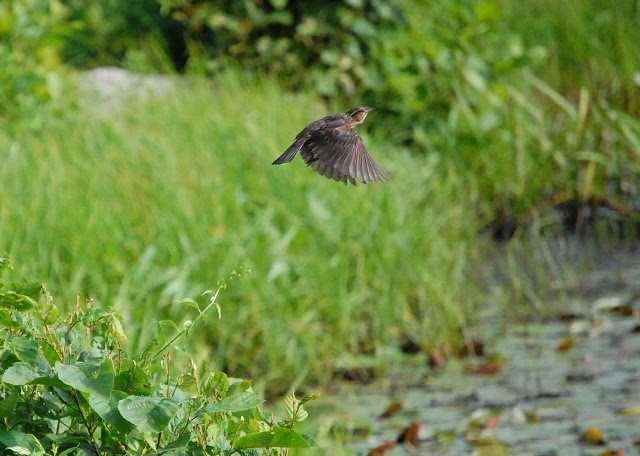 And if these are the offspring, these birds are showing the same prowess as their dad…
 …who is never far from them…and always heading swiftly through my lens’ field.
 This new generation is looking for all the world, right at home in its habitat.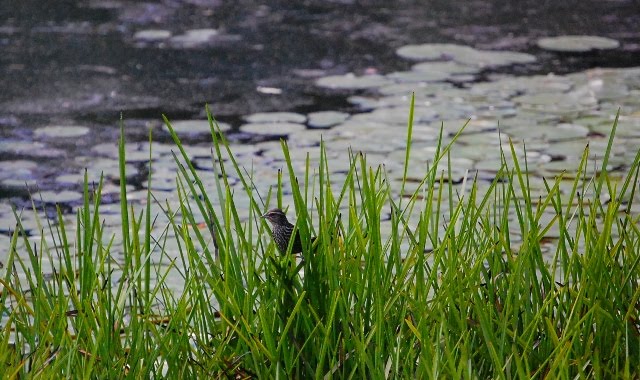



 SilverLining