
 When I began this blog more than four years ago, my camera was the Canon PowerShot80. About a year into blogging, I bought a Nikon D40 that came with an 18 – 35mm lens. After a year of frustration – just not having the ability to zoom close enough, I bought a used 35 – 200mm Nikkor for $100. A year into using that lens (which I love), the auto feature broke. So, for the past year I’ve been manually focusing all my photos. The truth is, being forced to manually focus has taught me a lot about my camera and photography and myself. I am very comfortable with manual focus now.
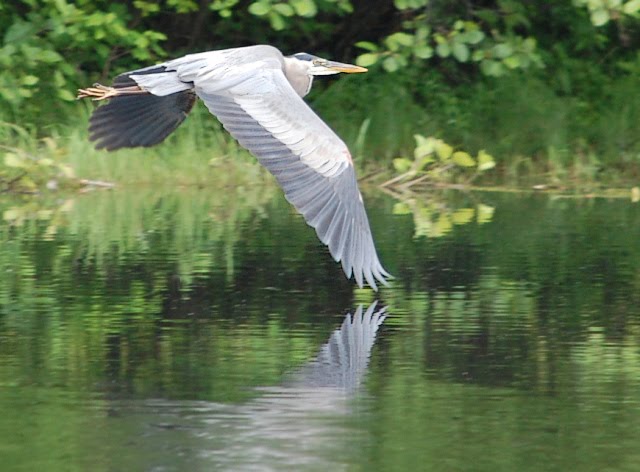
This year, with a little extra money that came in a tax return, I decided to buy the new Nikon 55 – 300mm lens about which I’ve been reading great things. The biggest plus is that it works with auto focus on the D40 – something many of the better lenses don’t do. I hope you’ll see the difference in my photos. I am already thrilled with this lens. I feel as if the emotion I feel when I’m at the pond, is finally coming through in the images. Have a look at the heron in the photo at the top of this post. Click on it to enlarge and see where the wing almost touches the water. This is the drama of nature. When I write in this blog, I don’t know the words to convey that kind of moment, that spacial event. Is it tension? Or emotion? Or exhilaration? So, I hope the photos say it for me. Now, I think they will.
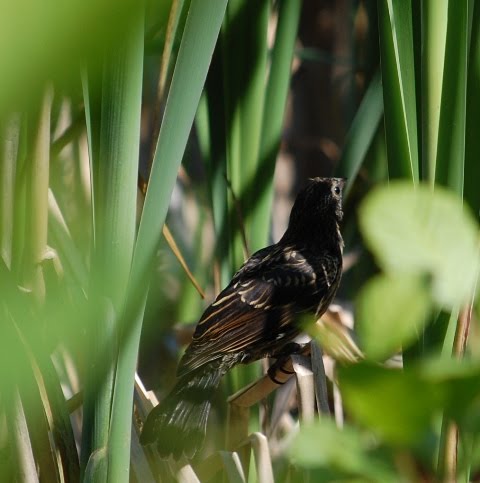
Anyone who watches red-winged blackbirds will recognize the quintessential look of this photo – the black wings with the brilliant red markings, against a background of green grasses. This bird lives in the marshes. When I see this image for real, at the pond, my whole self goes still. It is a feast of beauty to my eyes and spirit. I think how wonderful this place earth is. I experience joy.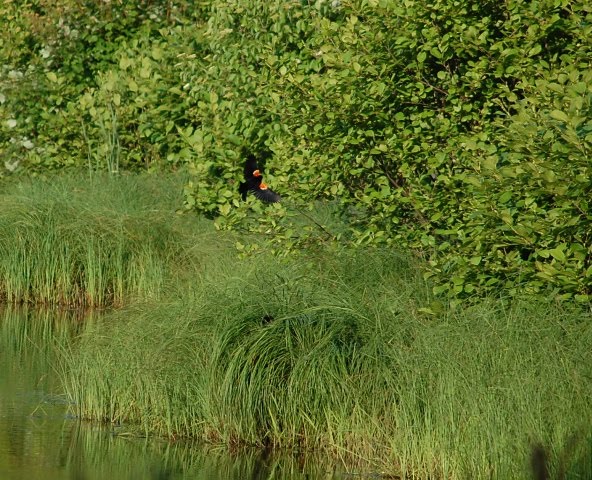 This time of year, I can hear the juvenile red-winged blackbirds in their nests at the base of tall reeds in one corner of the pond. They fly in and out, and I am able to take their pictures as they get used to walking in the grass or balancing near the tip of a reed. But never, till the photo below, have I seen a juvenile in the darkness of the lower reeds. Using the full 300mm power of my new lens, I was able to get this shot, as evening light filtered through and illuminated the bird just enough.
 And it was so easy to get this photo of the Elisa skimmer.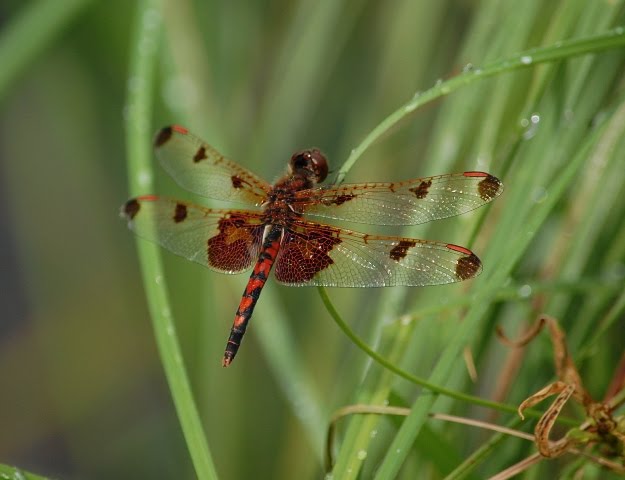
 SilverLining