When I wrote yesterday’s post, I knew I had a telephoto lens on order. But, I didn’t mention it, as I thought I had several days before it arrived. But today, just as I was deciding to take a break from my work and head out to the pond for a walk, a UPS truck arrived with my lens. I have mixed emotions about this. It’s been a challenge taking pictures with the wide-angle lens. It’s fine for the overall scenery, but trying to capture the nuances of variation in the creatures has been difficult. Still, I think it’s been great training for me.
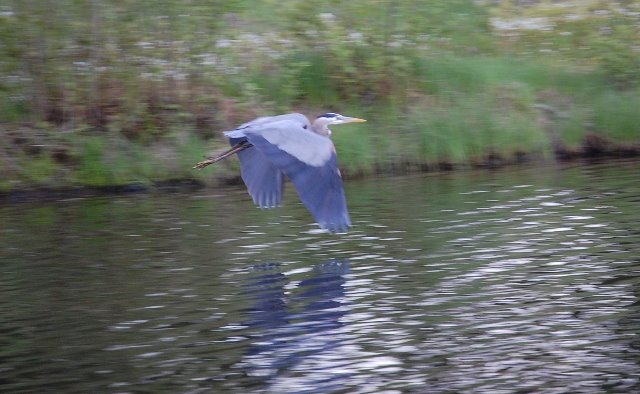
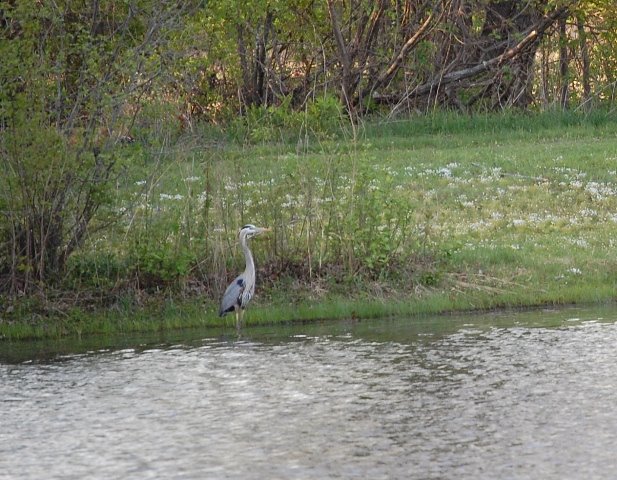
So, with some ambivalence, I put the new lens on my camera and headed out the door. As if not by a twist of fate, what arrived on my heels was the Blue Heron. I’ve seen this waterbird only once before this spring. Despite standing for more than an hour observing it late this afternoon, I’m not fully satisfied with the pictures (one is above) that I took today with my new lens. It isn’t as crisp as I had hoped. But, no matter, as my time keeping the Heron in the narrow range of my new viewfinder reaped a shot so unusual at the pond, it’s as if it came with the lens itself.
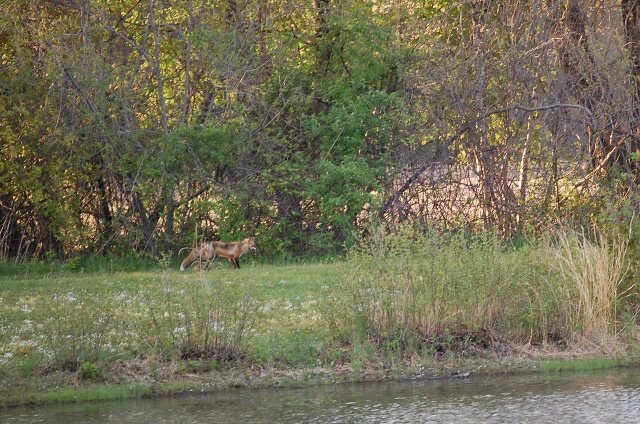
While I watched the Heron though the lens, a furry four-legged animal walked not eight feet from where the Heron stood. Now, I’ve described the Heron in past post. It’s a bold bird. It didn’t flinch as the thing passed by it. So brazen is this bird that it left its watch along the shoreline, where it had spent thirty minutes stalking fish, and walked up the bank to assess what had encroached on its turf. At first, I thought it was a dog. But, as no leash and person followed it, I raised my eyes from the camera to assist determining what it was, by putting it in fuller context. I was across the pond, so it was not until I returned home and looked at the pictures that I could see that it is a Red Fox. You’ll need to click on the photo to see it well. Return to the post using your back arrow.
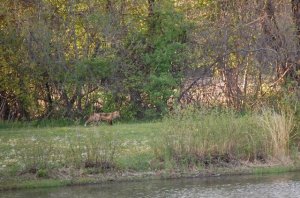
(When you click on the photo below to enlarge it, look closely behind the shrub on the left. You’ll see the Red Fox about to walk by the Heron as the bird calmly continues to watch the water.)

Below is the Heron, up the bank, watching the Fox.
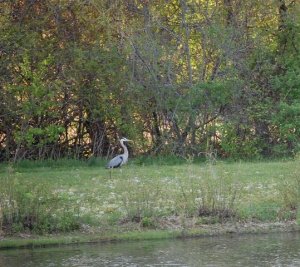
So, day one, the lens made a huge difference. It would have been frustrating to not be sure what it was that I saw and to have photos that didn’t quite make it clear.
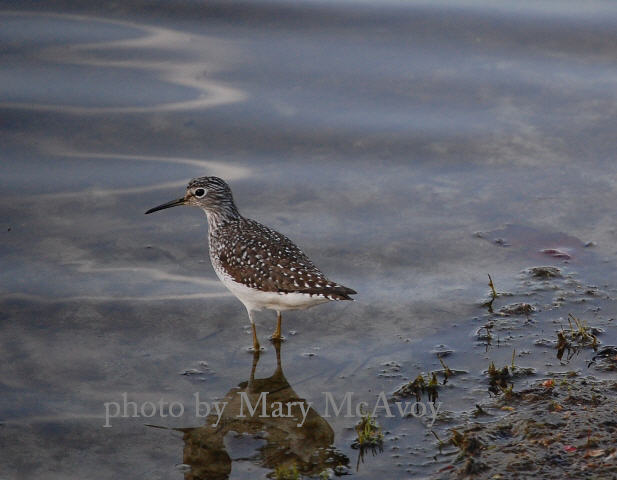
So that you can share my enthusiasm for the power of this new lens, here are other pictures I took today. The first shows a Greater Yellowlegs, which I saw for the first time two days ago but was not able to get the detail that this picture shows.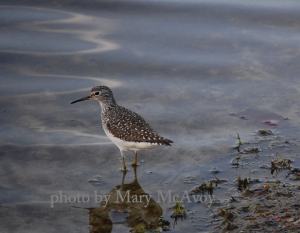
This waterbird, which is only about five inches long, has a remarkable wingspan of perhaps fifteen inches. (The photo below was taken with the wide-angle lens a couple of days ago.)
The ordinary American Robin is not looking so ordinary to me lately. This bird has delicate white markings on its tail when it’s spread for flight. As this photo shows, its color tones complement its natural habitat.

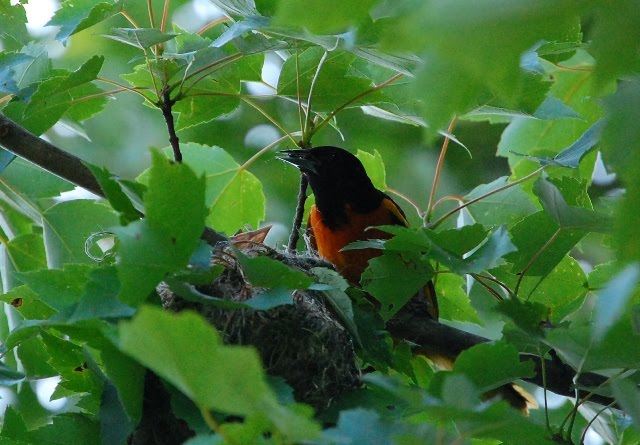
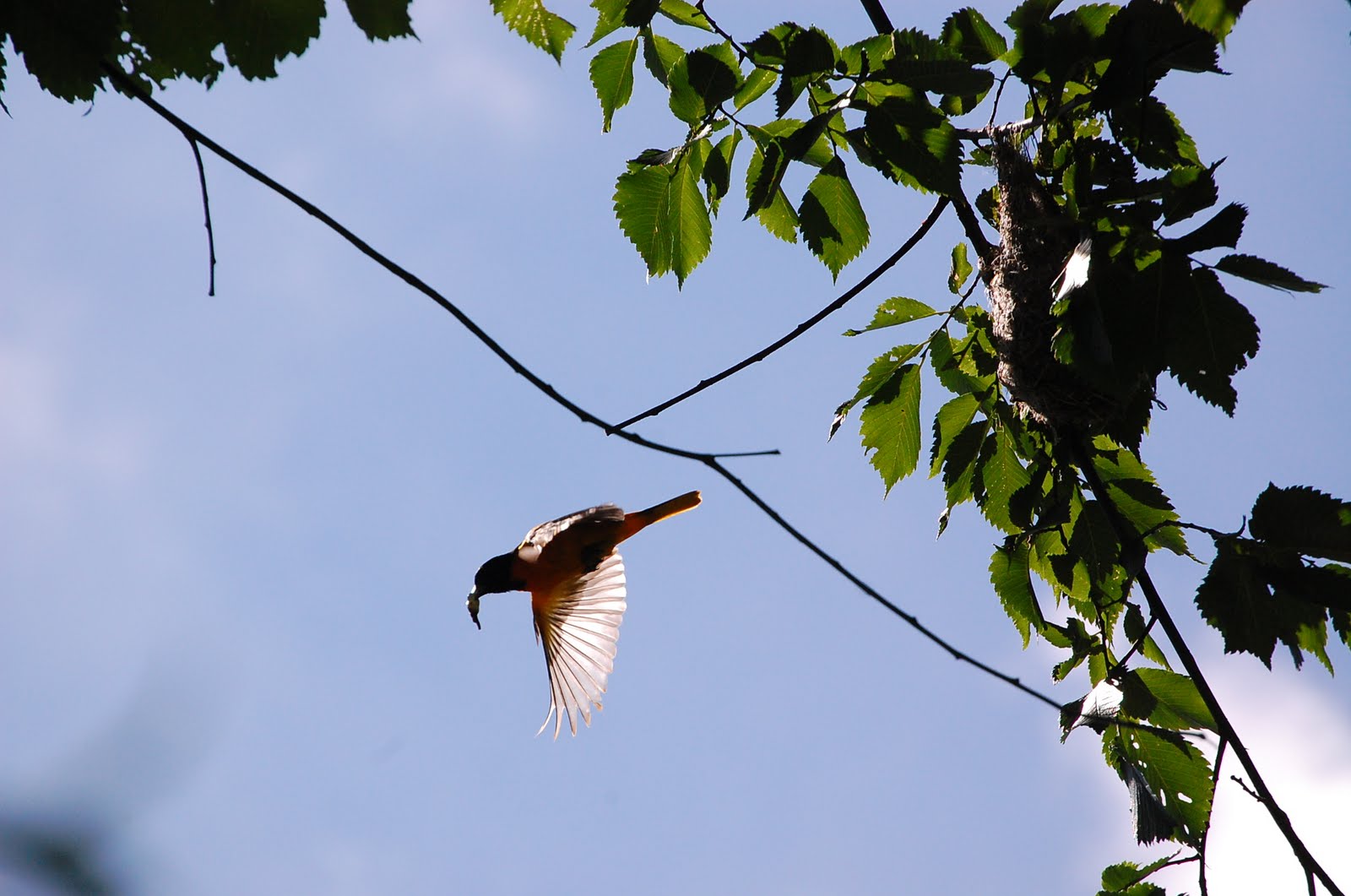
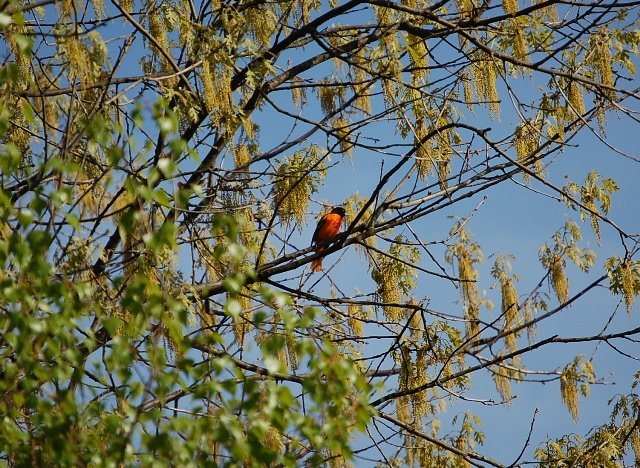
I must admit I’m quite happy to finally do justice to the colors of a Baltimore Oriole. This bird has the most striking orange, much brighter than the Robin, and the black is utterly black.

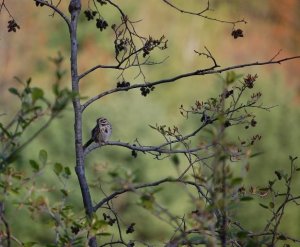
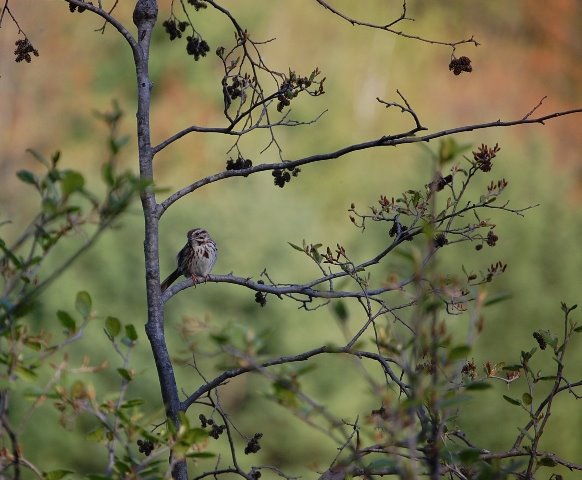
And, below is an up close and personal shot of the Song Sparrow, showing clearly its breast mark. Again, click on the photo to enlarge for best viewing.
I think I’ll try to note, by use of WA (wide-angle) and TP (tele-photo), which lens I use for future photos to this post. It’s not going to be the same. I suppose the viewing will be more interesting for readers. But, it seems a bit too easy to me to get such quality close-up shots!

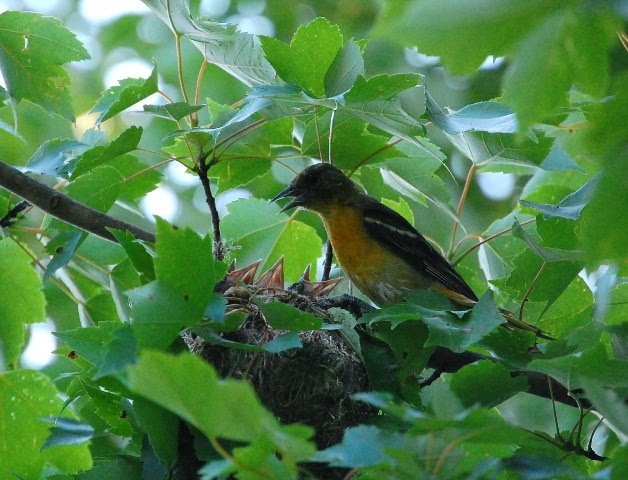
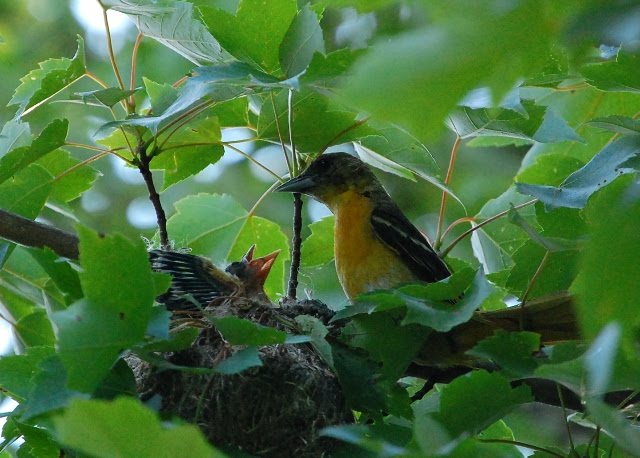
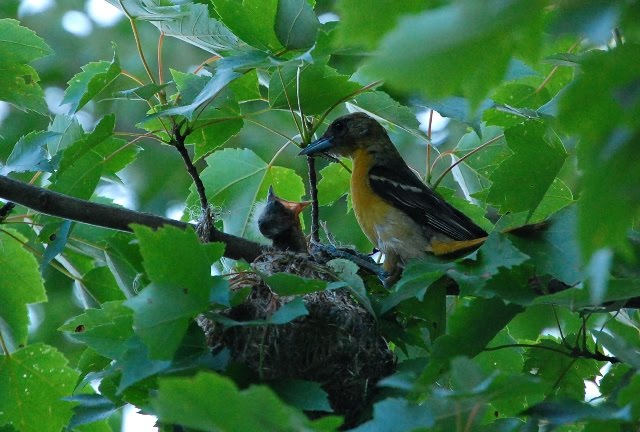
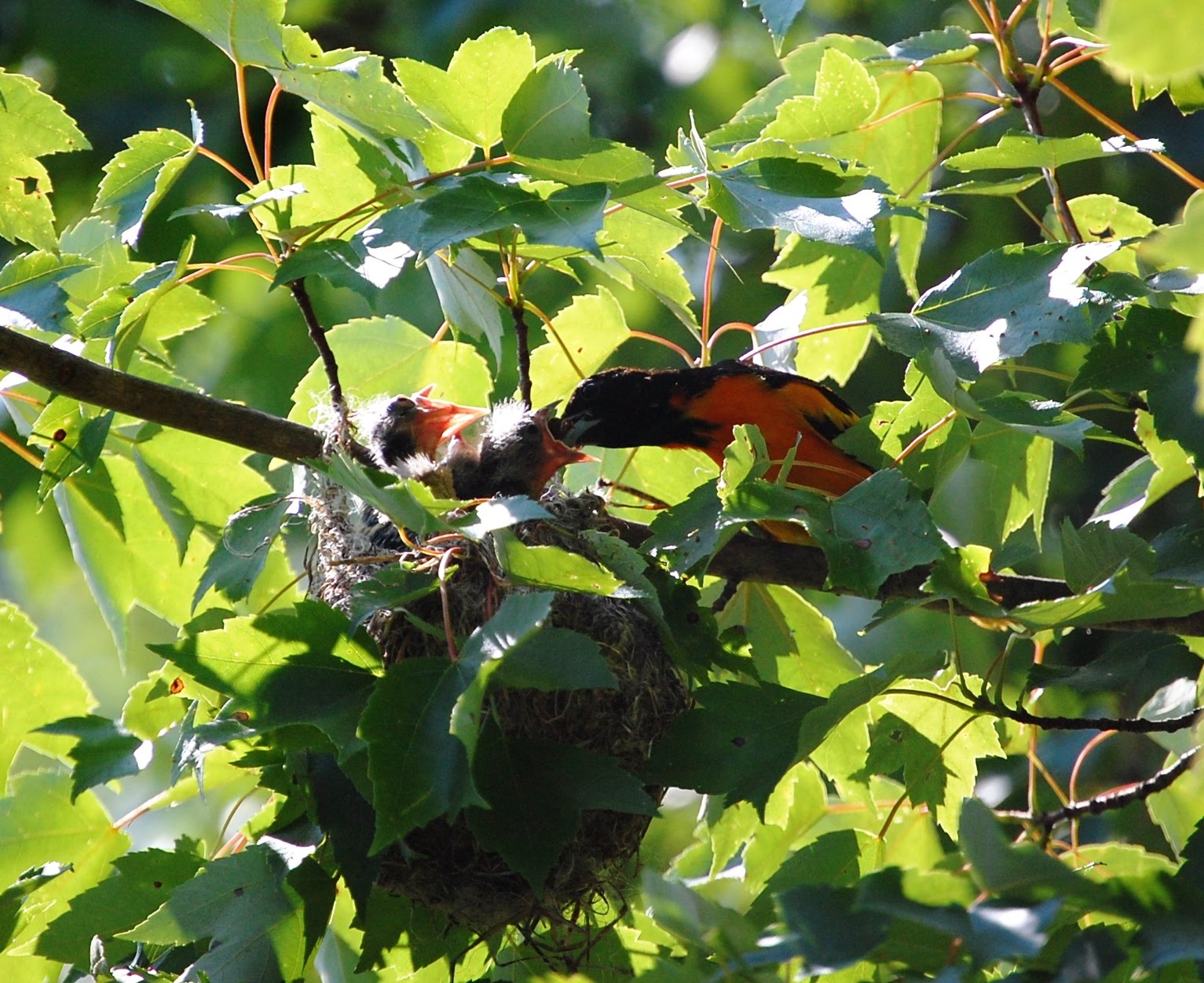
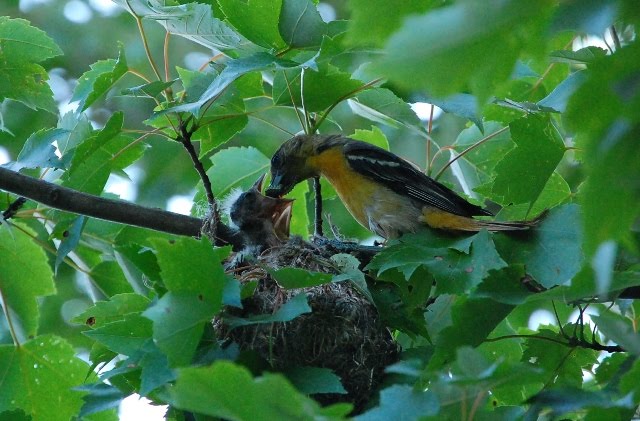
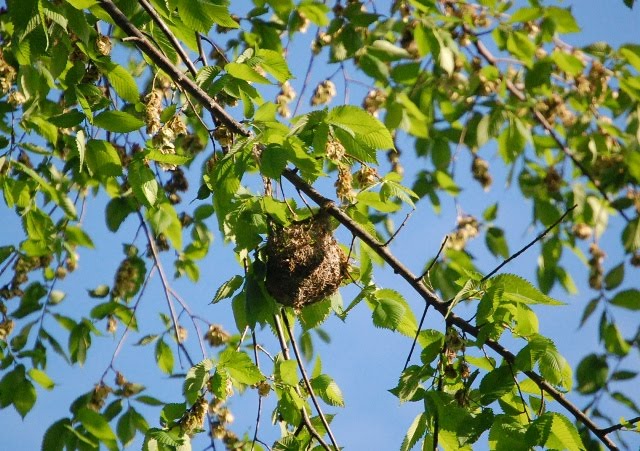 As the rain fell in torrents the past week, the orioles must have been busy despite the wind and rain. Two of their nests are on the far side of the pond. I’m excited about the nest above as it affords great visibility for the camera and me to potentially capture great photos.
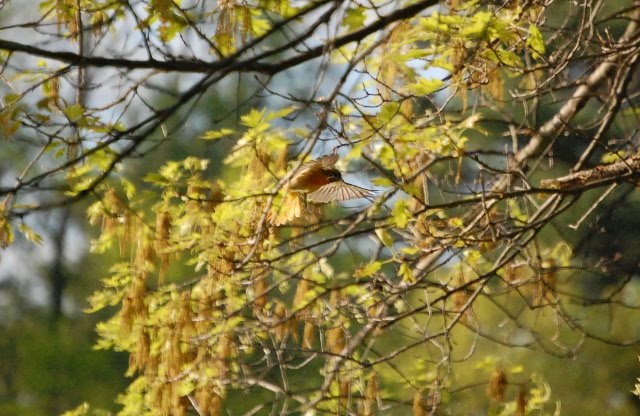 The picture above has visceral impact on me. While the photo is not a prize winner, the image shows me what I often see in and among the leaves and branches in springtime. This female Baltimore oriole is dancing the dance of nature, attracting her partner who is a few branches above. Her color tones blend with the not fully unfurled leaves of this tree. She is colored like her world, yet stands out to a watchful eye who can’t help but see the beauty of her open wings and fanned tail. This picture hits me in the chest with an emotional wave of “it’s springtime and the earth is in renewal.”
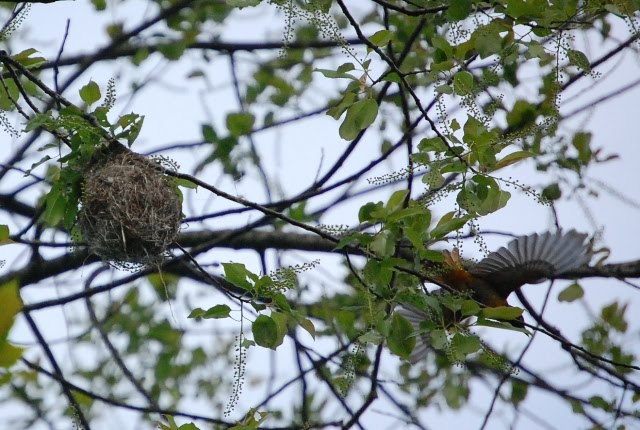 But while she dances for her mate, she also is busy preparing her nest. Above, you can see her and the work she’s instinctively done for her children, with her mates help.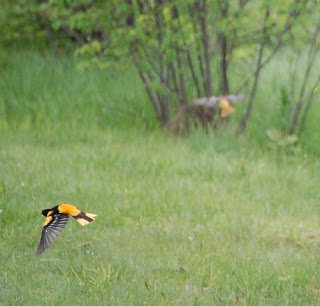







 SilverLining