
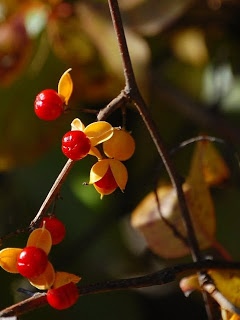
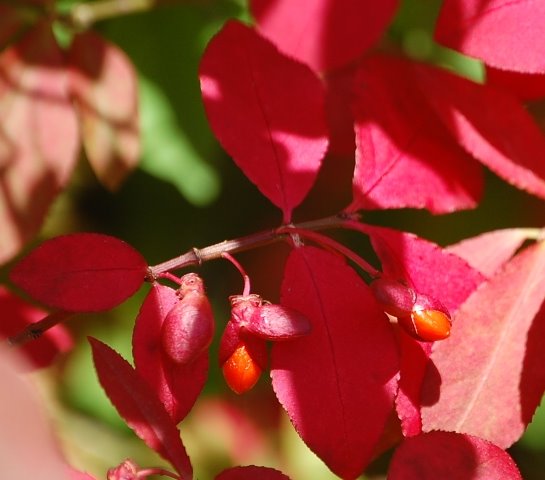
 Bittersweet is so pretty. That’s a simple truth. The deep red berries framed by their rich yellow peeling are beautiful adorning the outdoors or as a decorative accent within an interior setting. Enjoy these images I’ve taken of bittersweet that borders the pond.
Because of its beauty, I struggle with the truth about this plant – it is choking to death many of our trees. Bittersweet is not native to this country and it has no natural predator. Environmentalists ask that we eradicate its wild growth by cutting the vines, and by only growing it in contained pots. And that, whenever we use it decoratively, we dispose of the decoration in a bag, to contain the berries. 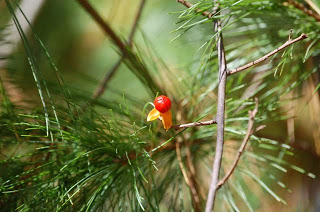
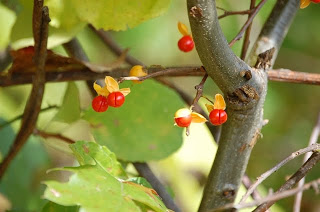 Recently, on road trips, I’ve noticed that along the highways (through the eastern states anyway), vast stretches of trees have been pulled to the ground by this vine.
At the pond, this destruction is very evident at this time of year when there are no leaves on the trees. Entwined with the bittersweet are both poison ivy and Concord grape vines. There is a real battle going on along the far side of the pond – and the trees are losing.
Even in its wrath, the vines are artistically beautiful, fluid and graceful.
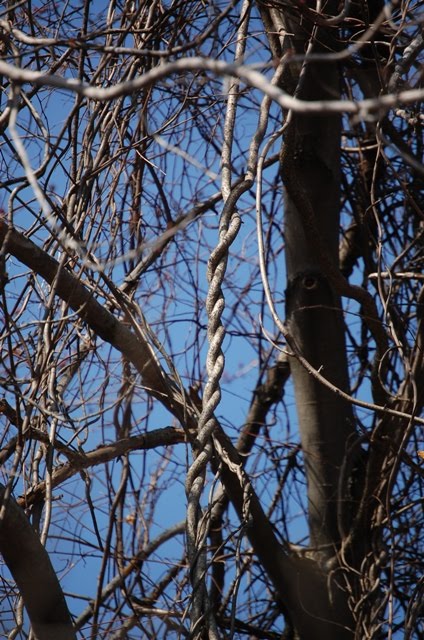
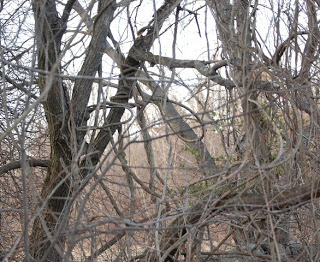 But the mass of their weave, as shown below, indicates how out of control and overpowering this plant has become.
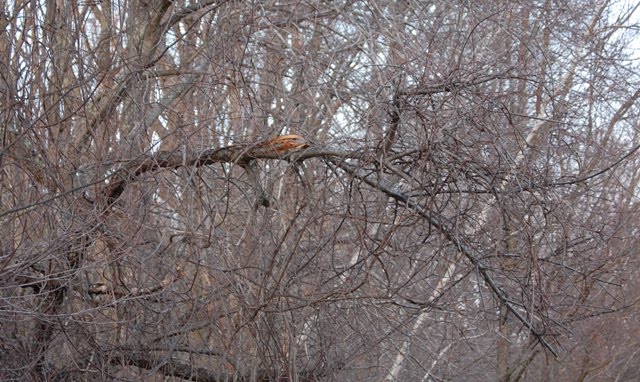
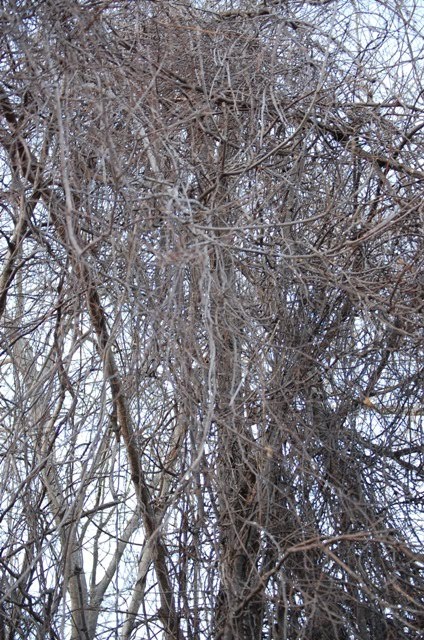 The destruction is evident in the pictures below of trees broken and bent by the pull of the vines. What appears as a photo of birch trees that I’ve neglected to rotate 90 degrees counter-clockwise, is truly the trees bent to that angle by the tug of the vines.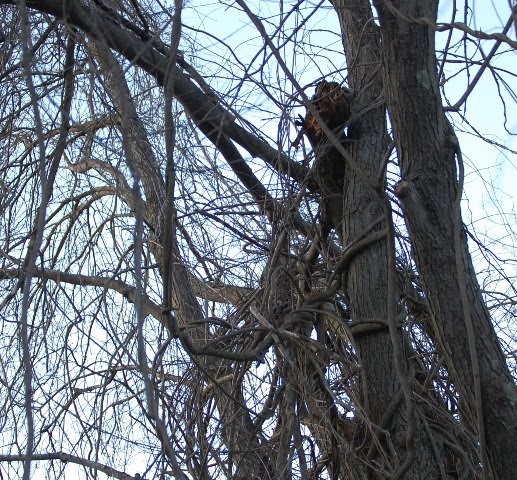
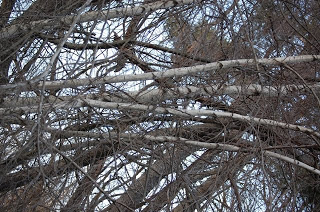 And you can see, too, the break in branches, the final give when the limb can no longer hold.
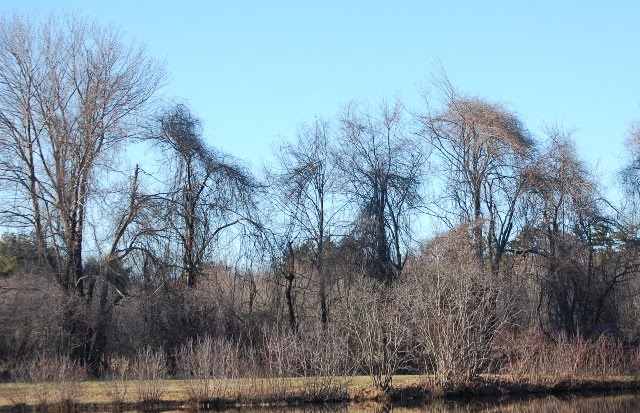
  When looking across the pond to its far side, the stunted growth of the trees is evident in the tree-top line.The closest view below looks to me to be not unlike a Tim Burton creation – something eerily close to reality, but distorted by a sinister force.
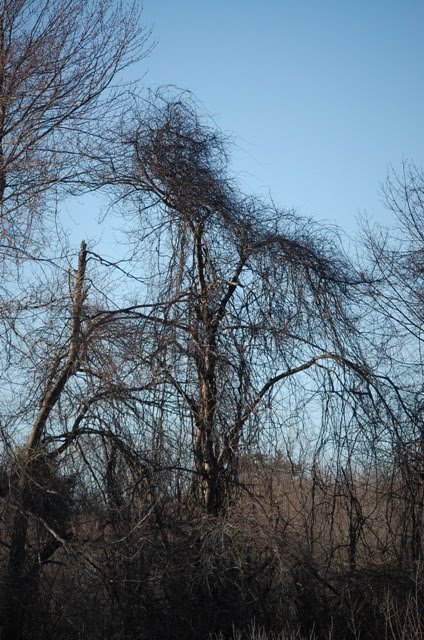 See the graceful sweep of the invasive plant as it reaches from one tree top to another in its unstoppable intent to reach for the sun’s light and warmth for its continued sustenance.
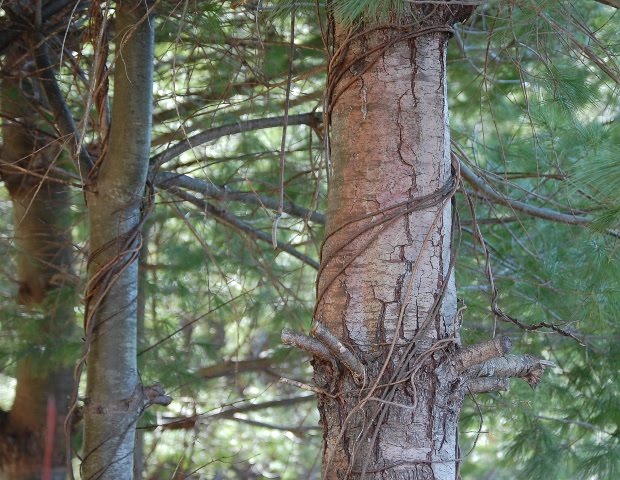
 The sturdy pines appear to hold up better. But I’ve seen the vines, with no urgency of time, cut deep into the trunk of a tree over the span of years.
  Again, here’s the pretty predator:



 SilverLining